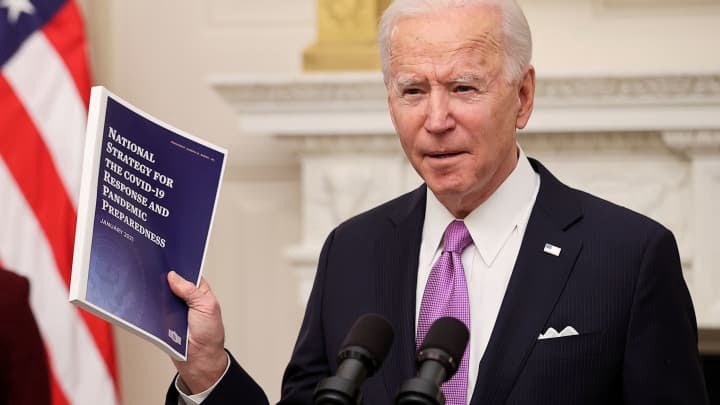
President Joe Biden’s surprising exit from the 2024 presidential race has upended the political arena, Vice President Kamala Harris has emerged as the front-runner for the Democratic nomination. With Biden’s endorsement, Harris is now under scrutiny, particularly concerning her plans for Social Security—a pivotal issue for many Americans.
Harris’s Potential Social Security Reforms
While Kamala Harris has yet to detail every aspect of her Social Security policy, her alignment with the Biden administration provides some clues. Historically, the Biden-Harris administration has opposed Republican efforts to cut Social Security and Medicare, adhering to a broader Democratic stance. If Harris becomes president, several significant changes to Social Security could be on the table:
1. Taxing Higher Incomes
The Old Age and Survivors Insurance (OASI) Trust Fund is projected to face potential depletion within the next decade, relying on payroll taxes to cover only about 77% of benefits. To address this shortfall, the Biden-Harris administration has proposed taxing earned income above $400,000 while leaving wages between $168,600 and $400,000 untaxed. This strategy aims to fortify the trust fund by focusing on higher-income earners.
2. Adjusting the COLA Formula
Currently, Social Security cost-of-living adjustments (COLAs) are based on the Consumer Price Index for Urban Wage Earners and Clerical Workers (CPI-W). The Biden-Harris administration supports shifting to the Consumer Price Index for the Elderly (CPI-E), which better accounts for the healthcare costs that disproportionately impact seniors. This change could lead to more accurate and beneficial adjustments for retirees.
3. Raising the Primary Insurance Amount (PIA)
The Primary Insurance Amount (PIA) determines Social Security benefits based on the age of benefit claims and average indexed monthly earnings. Harris’s administration may advocate for increasing the PIA for Americans aged 78 to 82 to help cover rising healthcare costs. This adjustment would offer additional financial support to older seniors facing higher expenses.
4. Enhancing the Special Minimum Social Security Benefit
The special minimum benefit provides assistance to low-wage workers, irrespective of their total earnings. In 2024, this benefit ranges from $50.90 to $1,066.50 per month, based on years of Social Security coverage. The Biden-Harris administration proposes increasing this minimum benefit to 125% of the federal poverty level for an individual, aiming to reduce the burden on other federal programs and offer greater financial stability for low-wage workers.
5. Increasing SSA Funding
For 2025, the Biden-Harris administration plans a 9% increase in funding for the Social Security Administration (SSA) compared to 2023 levels. This boost would enhance customer service at SSA field offices, state disability determination services, retiree teleservice centers, and services for individuals with disabilities and their families. Improved funding is expected to ensure a more efficient and effective administration of Social Security benefits.

Impact and Implications
These proposed reforms underscore the administration’s commitment to bolstering Social Security’s financial stability and addressing the needs of beneficiaries. As the election nears, Harris’s stance on Social Security will likely become a central topic in discussions and debates, shaping voters’ decisions.
Kamala Harris’s potential presidency could bring significant changes to Social Security, focusing on both sustainability and support for seniors and low-wage workers. As the leading Democratic candidate, her policy proposals will play a crucial role in defining the future of this essential program.
With these anticipated changes, Harris aims to strengthen Social Security and ensure its continued support for millions of Americans.