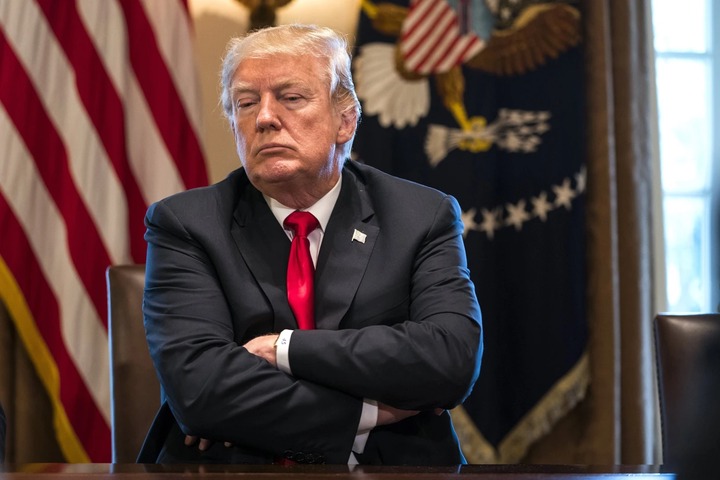
Former President Donald Trump finds himself at a crossroads, facing a formidable legal challenge following a pivotal ruling by Judge Sarah Wallace of the Colorado Supreme Court. The judge’s declaration, classifying Trump’s actions on January 6, 2021, as insurrection, reverberates through the legal landscape, further fueling a contentious ballot dispute.
In a detailed report by Newsweek on Tuesday, December 5, it was revealed that both Trump and his opponents are actively appealing various aspects of the ruling, turning the Colorado case into a litmus test with implications for Trump’s potential participation in the 2024 presidential election.
The lawsuit, spearheaded by a group of voters supported by Citizens for Responsibility and Ethics in Washington, contends that Trump’s involvement in the Capitol attack disqualifies him under the 14th Amendment of the U.S. Constitution. This constitutional provision prohibits individuals who have “engaged in insurrection or rebellion” from running for federal office.
Judge Wallace’s ruling on November 17, while sparing Trump from immediate disqualification by asserting he was not an “officer of the United States” as defined by the 14th Amendment, significantly underscores the gravity of his role in the Capitol attack. The judge explicitly stated that Trump’s “conduct and words were the factual cause of, and a substantial contributing factor” to the assault, framing his actions as an “insurrection” through incitement.
Andrea Katz, a law professor at Washington University, characterizes Wallace’s insurrectionist ruling as “deadly serious” for Trump. Katz emphasizes the potential for other courts to view Trump’s witnesses as irrelevant to the insurrectionist finding, noting the departure from the traditional understanding that the president is not an “officer.”
Historically, the term “officer” applied to the president during the 14th Amendment debates, with Katz arguing that the insurrection clause aimed to prevent Confederate rebels from holding federal office. Citing the U.S. Supreme Court’s recent decision in Lucia vs. SEC, Katz defines a federal officer as one holding a “continuing” position established by law and exercising significant authority pursuant to U.S. laws.
Constitutional law professor Peter Shane from New York University observes the peculiar nature of the lower court’s opinion, where Trump seemingly “won” on the easier issue for the plaintiffs. Shane deems the argument that the president should not be considered an officer of the United States as nonsensical, supporting the lower court’s determination that Trump’s acts amounted to engaging in insurrection against the Constitution.
However, the political implications of keeping Trump off the ballot are considered “daunting” by Shane. Over a dozen attorneys general from Republican-controlled states have entered briefs in the case, while a group of 19 Republican-leaning states, led by Indiana Attorney General Todd Rokita, advocates for entrusting Insurrection Clause questions to Congress rather than state officials or state courts.
As the legal saga unfolds, the nation watches the Colorado Supreme Court’s deliberations, recognizing the potential impact on Trump’s political future and the broader landscape of legal battles that await the former president.