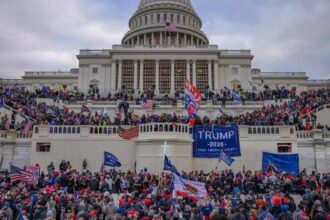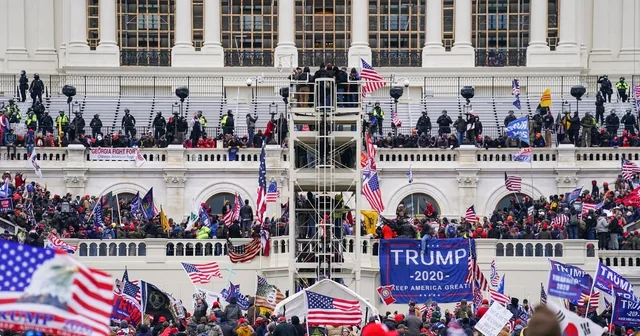
Former President Donald Trump has sparked outrage once again with his controversial comments regarding the insurrectionists involved in the January 6 Capitol riot. During an appearance on Dan Bongino’s show, Trump claimed that those who stormed the Capitol are facing unfair treatment by the federal justice system. However, his remarks drew a deeply flawed historical comparison to Japanese Americans who were unjustly incarcerated during World War II.
A Disturbing Analogy
In his recent interview, Trump stated, “Nobody’s ever been treated like this. Maybe the Japanese during the Second World War, frankly, they were held, too.” This comparison has drawn criticism for its insensitivity and historical inaccuracies. Unlike the January 6 defendants, Japanese Americans were not charged with crimes; they were forcibly removed from their homes and placed in internment camps under the pretense of national security following the attack on Pearl Harbor.
The wartime incarceration of Japanese Americans is a dark chapter in U.S. history. The conditions in these camps were often dire, filled with families, including the elderly and young children. Ultimately, the U.S. government recognized this injustice, leading to formal apologies and reparations issued by Congress and President Ronald Reagan in the form of $20,000 checks to each surviving detainee.
Differences in Context
Trump’s supporters arrested for their roles in the January 6 riot have faced various criminal charges, including violent crimes and seditious conspiracy. In contrast, the Japanese Americans held during World War II were not charged with any offenses. The gravity of the January 6 events, which resulted in injuries to law enforcement and fatalities, further emphasizes the vast differences between these two situations.
In the same interview, Trump made several false statements about the January 6 insurrection, asserting that “nobody was killed” and that “there were no guns involved.” In reality, several individuals died during the riot, including Trump supporter Ashli Babbitt, who was shot by law enforcement. Reports have also emerged revealing that firearms were brought into Washington, D.C., during the events of that day.
Legal Consequences for Insurrectionists
Trump’s claims regarding a recent Supreme Court ruling were also misleading. He asserted that his supporters “really won in the Supreme Court” with the decision in Fischer v. United States, which challenged the application of an obstruction statute against some January 6 defendants. While the court did rule in favor of some defendants, the legal implications are complex, and over 1,200 individuals have been charged in connection with the riot. Some remain in custody awaiting trial, while others have already served their sentences.