In a live interview on Fox News’ “Sunday Night in America with Trey Gowdy,” South Carolina Sen. Tim Scott unequivocally announced his exit from the Republican presidential nomination race, accompanied by a commitment not to endorse any candidate at this time.
“The best way for me to be helpful is to not weigh in,” he declared, leaving a void in the GOP landscape just nine weeks before the Iowa caucuses.
Why Tim Scott Departed from the 2024 Republican Presidential Race
Scott, the only Black Republican in the Senate and a rising GOP star, centered his campaign on an “optimistic, positive message anchored in conservatism.” Despite polling in the upper single-digits in key states like Iowa, South Carolina, and New Hampshire, Scott’s departure leaves an open question: which candidate will secure the support of his broad coalition?
An anonymous strategist close to Scott acknowledged the senator’s unique appeal, stating, “you’re talking about the most favorably viewed Republican in America right now. So he has a pretty unique coalition of supporters.”
The Race for Scott’s Supporters
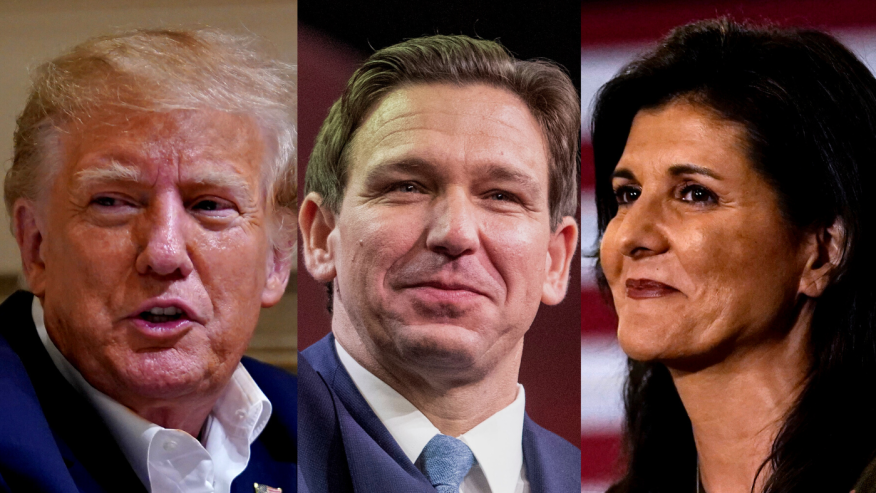
The strategist emphasized that Scott’s supporters are highly sought after, particularly by Florida Gov. Ron DeSantis and former United Nations ambassador and ex-South Carolina Gov. Nikki Haley. Both candidates promptly issued statements praising Scott upon his exit, positioning themselves in the ongoing race.
Nicole Schlinger, an Iowa-based strategist, anticipates a fragmented shift among Scott supporters, asserting, “there isn’t necessarily a natural place for Tim Scott supporters to all flock as a group. I think these people are going to go back to the drawing board and kick the tires on someone else.”
The DeSantis-Haley Duel for Support
DeSantis and Haley, vying for second place behind the commanding front-runner, former President Trump, are gearing up to court Scott’s supporters aggressively. Haley’s campaign announced a substantial $10 million ad buy in Iowa and New Hampshire, overshadowing DeSantis’s current plans. However, DeSantis benefits from the backing of the Never Back Down super PAC.
Haley and Scott share a history, having political friends, allies, and donors in common. Dave Wilson, a South Carolina-based Republican consultant, notes that Scott’s departure eliminates potential voter confusion between hometown figures.
Appeal to Evangelical Voters
Scott’s suspension, coupled with former Vice President Mike Pence’s recent departure, leaves social conservatives and evangelical voters without their two strongest champions. DeSantis’s campaign communications director, Andrew Romeo, asserts that the Florida governor is making headway with evangelical voters, positioning himself as the “only true conservative” in the race.
Iowa evangelicals, left without Scott and Pence, now face a choice between DeSantis, Trump, or Haley. Wilson suggests that Casey DeSantis, the Florida governor’s wife, could play a pivotal role in securing evangelical support.
As the GOP landscape reshapes, candidates are compelled to refine their messaging for audiences beyond headlines, particularly as they court influential evangelical voters in Iowa and South Carolina.