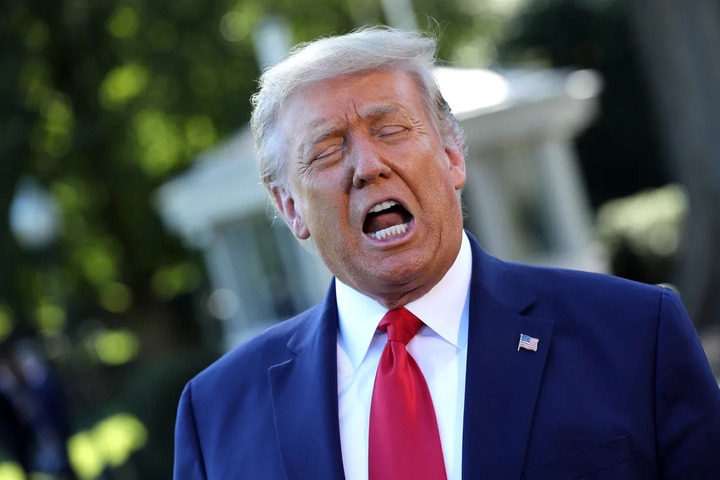
Former President Donald Trump, in a provocative 2 a.m. post on Truth Social on Thursday, January 18, 2024, declared his belief that a sitting president should enjoy “total immunity” from criminal prosecution, even in cases where their actions might “cross the line.”
Trump asserted that providing such immunity is essential for the optimal functioning of a president, contending that without it, even well-intentioned mistakes could result in almost certain indictment by the opposing party at the conclusion of their term.
“A PRESIDENT OF THE UNITED STATES MUST HAVE FULL IMMUNITY, WITHOUT WHICH IT WOULD BE IMPOSSIBLE FOR HIM/HER TO PROPERLY FUNCTION,” Trump emphasized in the all-caps post. “ANY MISTAKE, EVEN IF WELL INTENDED, WOULD BE MET WITH ALMOST CERTAIN INDICTMENT BY THE OPPOSING PARTY AT TERM END. THERE MUST BE CERTAINTY.”
Contrary to Trump’s claim of facing indictment for well-intentioned mistakes, the former president is currently under scrutiny not for a mistake but for allegedly attempting to defraud the United States by seeking to illegitimately remain in power after losing the 2020 presidential election.
Expanding the scope of his argument for immunity, Trump included law enforcement officials, stating that police should also enjoy immunity from prosecution to maintain effective crime prevention.
“EXAMPLE: YOU CAN’T STOP POLICE FROM DOING THE JOB OF STRONG AND EFFECTIVE CRIME PREVENTION BECAUSE YOU WANT TO GUARD AGAINST THE OCCASIONAL ‘ROGUE COP’ OR ‘BAD APPLE,” Trump asserted. “ALL PRESIDENTS MUST HAVE COMPLETE AND TOTAL PRESIDENTIAL IMMUNITY, OR THE AUTHORITY AND DECISIVENESS OF A PRESIDENT OF THE UNITED STATES WILL BE STRIPPED AND GONE FOREVER. Hopefully, this will be an easy decision. God bless the Supreme Court!”
Contradicting Trump’s plea for broad immunity, it’s worth noting that the former president has previously called for the criminal prosecution of law enforcement officials, including former FBI Director James Comey, whom he accused of wrongdoing.
As Trump advocates for sweeping immunity, legal scholars and critics argue that such a proposition goes against the principles of accountability and the rule of law.
The notion of providing unchecked immunity, particularly in cases where actions may “cross the line,” raises concerns about potential abuse of power and undermines the checks and balances inherent in a democratic system.
The debate over presidential immunity is not new, and Trump’s latest proclamation is likely to add fuel to an ongoing conversation about the extent of legal protections afforded to a sitting president.
As the discussion continues, the nation watches closely, contending with the delicate balance between preserving executive authority and upholding the fundamental principles of justice and accountability.