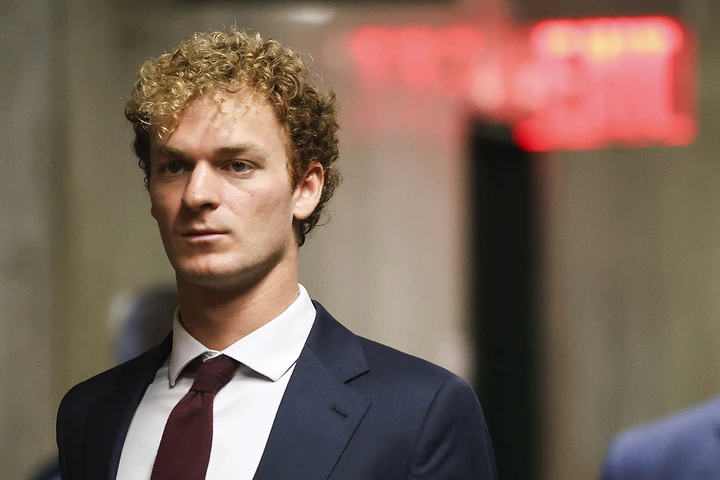
His second inaugural address, President Donald Trump declared a bold agenda to end what he called the “weaponization of our Justice Department.” Highlighting his commitment, Trump issued an executive order on his first day back in office, promising to restore fairness to America’s justice system. This pledge resonated strongly with the public, particularly after the controversial prosecution of Marine veteran Daniel Penny by Manhattan District Attorney Alvin Bragg. Penny was acquitted in December 2024 of charges related to the chokehold death of Jordan Neely, a violent subway rider.
The Penny case became a rallying cry for critics of selective prosecution, with many accusing Bragg of pursuing charges based on political and racial motivations rather than justice. Trump’s administration signaled its intent to investigate such instances of alleged prosecutorial overreach, focusing not only on federal agencies but also on state and local officials who may have used their powers improperly.
Targeting Abuse in the Justice System
Trump’s executive order, titled “Ending the Weaponization of the Federal Government,” explicitly condemned the Biden administration for what it described as unconstitutional law-enforcement actions. The order cited instances such as targeting parents protesting at school board meetings and silencing critics of government policies. Trump vowed to take corrective measures, including firing federal agents and prosecutors found guilty of politically motivated actions and implementing reforms to prevent future abuse.
However, Trump acknowledged that many of the most egregious cases of justice system misuse occurred at the state and local levels, beyond federal control. The prosecution of Daniel Penny by Bragg exemplified this issue, with critics alleging that the case was driven more by political agenda than evidence.
Investigating State and Local Misconduct
Legal experts within Trump’s administration have floated the idea of using federal civil rights statutes to investigate state-level actions. For example, under 18 U.S.C. 241, it is illegal to conspire to “injure, oppress, threaten, or intimidate” someone exercising their constitutional rights. The Justice Department could examine whether Bragg’s decision to prosecute Penny was influenced by race or political bias.
Trump’s allies have pointed to Bragg’s record to support their case. Shortly after taking office, Bragg announced that his office would reduce or stop prosecuting certain crimes, such as resisting arrest and low-level drug offenses, under a race-based “equity” framework. Critics argue that this selective approach undermines public trust and raises questions about equal application of the law.
Expanding the Scope
The Trump administration could broaden its investigations to other jurisdictions where similar concerns have been raised. State prosecutors like Fani Willis in Atlanta have faced accusations of partisan decision-making, particularly in cases involving Republican figures. Moreover, the disparate treatment of political movements, such as leniency toward Black Lives Matter protesters while targeting conservative activists, has drawn scrutiny.
Trump’s Justice Department may also look into whether prosecutors have violated First Amendment rights by targeting individuals or groups based on their political affiliations or viewpoints. In New York, for instance, Attorney General Letitia James has been accused of pursuing cases against Republicans, including Trump himself, while overlooking similar conduct by Democrats.
A Path Forward for Justice Reform
Supporters argue that these federal investigations are not only lawful but necessary. They draw parallels to the Civil Rights era, when the Justice Department intervened against state-level injustices targeting Black Americans and their allies. By using similar tools, the Trump administration could address modern abuses of power that threaten constitutional rights.
While critics may accuse Trump of overreach, proponents counter that federal oversight is essential to ensure accountability at all levels of government. They note that even during the Biden administration, Attorney General Merrick Garland allowed federal prosecutions based on novel legal theories, such as those used against Trump and his allies over the 2020 election.
By taking on these challenges, Trump aims to restore public faith in the fairness of the justice system. The Penny case, emblematic of broader concerns, underscores the urgency of reform. Whether the administration’s efforts will succeed in creating lasting change remains to be seen, but the commitment to addressing perceived injustices has already struck a chord with many Americans.