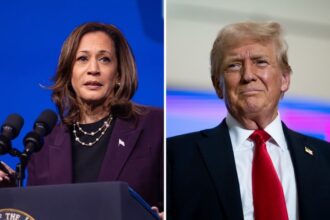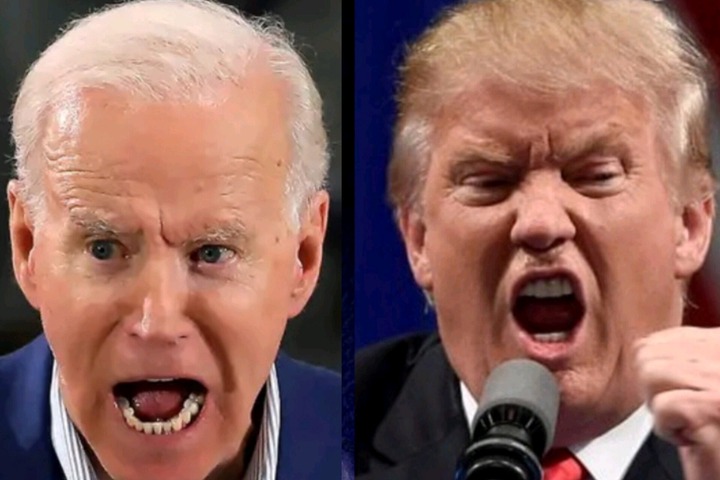
Former President Trump has entered the fray of controversy surrounding anti-Israel protests on college campuses, criticizing President Biden for what he perceives as inaction in the face of escalating tensions. In a recent interview with Sean Hannity on Fox News, Trump voiced his concerns over the growing demonstrations and urged Biden to take decisive steps.
The backdrop for Trump’s remarks is the recent clash between protestors and law enforcement at Columbia University, where the NYPD intervened to quell escalating tensions. This intervention underscores the broader debate over free speech and political expression on college campuses, particularly regarding the Israeli-Palestinian conflict.

Trump’s call for Biden to “strengthen up” reflects the gravity of the situation and the urgent need for proactive measures. However, his commentary has also intensified the already contentious discourse surrounding the issue, further polarizing opinions.
The anti-Israel protests have become a rallying point for various advocacy groups and student organizations, each passionately advocating for their respective positions. Yet, the confrontations have raised legitimate concerns about the potential for violence and the necessity of effective conflict resolution strategies.
The events at Columbia University mirror a larger societal divide, where conflicting viewpoints often lead to tension and discord. As the situation unfolds, all eyes are on the Biden administration to navigate the delicate balance between safeguarding free speech and maintaining public order.
The clash between protestors and law enforcement highlights the complexities of addressing contentious issues within academic settings. Universities, traditionally champions of free thought and expression, now face the challenge of fostering dialogue while ensuring the safety of all individuals involved.
In response to escalating tensions, campus administrators and student leaders are tasked with finding common ground and promoting constructive engagement. The imperative for open, respectful dialogue has never been more apparent as communities strive to bridge divides and foster understanding.
As the nation grapples with the aftermath of these events, it’s clear that the Israeli-Palestinian conflict remains deeply divisive with far-reaching implications. How President Biden and other leaders navigate these challenges will profoundly shape future discourse and action on college campuses and beyond.