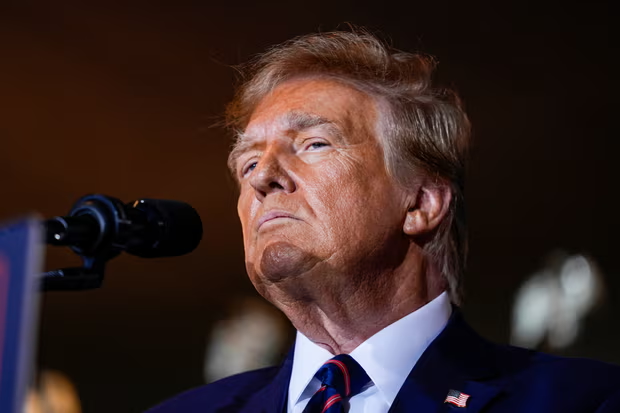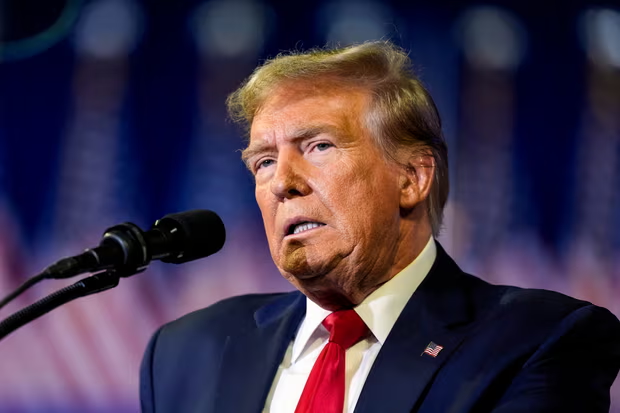
Former President Donald Trump has filed a petition with the US Supreme Court on Monday, seeking to keep the criminal case regarding his alleged attempts to overturn the 2020 election results on hold. This move comes as he prepares to challenge a recent ruling by the federal appeals court, which concluded that he was not immune from prosecution in this matter.
In the 110-page petition submitted by Trump’s legal team, comprising John Sauer, John Lauro, and Greg Singer, they argue for a stay of the mandate pending further review by the Supreme Court. They assert that Trump meets the criteria for a stay, emphasizing the likelihood of the Supreme Court hearing the case and the potential irreparable harm Trump could face if the trial proceeds without further review.
The core of Trump’s argument revolves around presidential immunity, a stance his legal team has consistently maintained as a means to delay the trial. This strategy, aimed at postponing any legal proceedings potentially beyond the 2024 election, aligns with Trump’s perceived ability to pardon himself or influence the dropping of charges should he win a second term.
However, both the district court judge overseeing the case, Tanya Chutkan, and a three-judge panel at the DC circuit, have rejected Trump’s broad claims of immunity. The panel’s unanimous opinion refuted the notion that a president is beyond the reach of the law, emphasizing the importance of checks and balances in the US government system.
Despite the consistent legal setbacks, Trump’s legal team views the immunity argument primarily as a delaying tactic rather than a viable legal defense. It serves as a mechanism triggering automatic stays and allowing for appeals before the trial proceeds.
The recent ruling by the DC circuit panel mandated that Trump petition the Supreme Court by a specified deadline to maintain the stay. Failure to do so would result in the case progressing at the lower court level, potentially leading to trial proceedings while awaiting further appeals.
Trump’s chief appellate lawyer, John Sauer, prepared the application for the stay over the weekend, reflecting the urgency within Trump’s legal team to keep the case frozen pending further Supreme Court review. However, uncertainties remain regarding whether the Supreme Court will agree to hear the case and the timeline for any potential trial proceedings.
The Supreme Court’s next steps will likely determine whether Trump faces trial before the 2024 presidential election. Should the court decline to hear the case, jurisdiction would revert to the federal district court, which has shown a willingness to proceed with the trial expeditiously. Alternatively, if the Supreme Court accepts the case, the timing of its decisions and proceedings could significantly impact the likelihood of a trial occurring before the election.
As the legal battle continues, the speed at which the Supreme Court acts becomes increasingly pivotal, especially considering the seven-month preparation window promised by Judge Chutkan. The outcome of these legal maneuvers holds significant implications for Trump’s future and the broader political landscape.