Former President Donald Trump is facing a new legal challenge over allegations of using music without permission during his 2024 presidential campaign. Multiple artists and record labels, including Atlantic Records, are accusing Trump of violating their intellectual property rights and damaging their reputations by playing their songs at rallies and events without obtaining proper licenses.
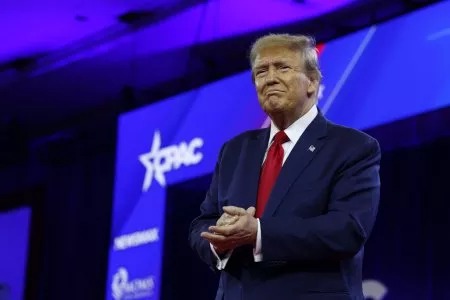
The specific incident in question involves the song “Hold On, I’m Comin'” by the R&B duo Sam & Dave, owned by Atlantic Records. The song was reportedly played at the end of Trump’s speech at the Conservative Political Action Conference (CPAC) in Orlando on February 25, 2024.
Atlantic Records claims that Trump did not acquire the necessary license or authorization to use the song, and the record label was unaware of his intention to do so. A spokesperson for Atlantic Records expressed being “appalled” by Trump’s unauthorized use of the song, calling it “an insult to the legacy of Sam & Dave and the entire Atlantic Records family.” The record label is considering legal action to protect its rights.
This is not the first time Trump has faced such accusations; artists like The Rolling Stones, Neil Young, Rihanna, Pharrell Williams, Adele, Elton John, and The Smiths have previously complained about the unauthorized use of their music during Trump’s political events. Some artists have publicly denounced Trump and requested him to stop using their music, while others have taken legal action.
The legal basis for such accusations lies in “public performance rights,” where the owners of musical works have the exclusive right to perform, broadcast, or transmit their works to the public. Failure to obtain a proper license or permission for public performances can lead to copyright infringement claims and legal consequences.
The enforcement of public performance rights can be complex, considering factors such as venue licenses, fair use exceptions, and public domain status of the music. The outcome of a case may depend on specific circumstances, evidence, and arguments presented by both parties.
Beyond the legal implications, the unauthorized use of music in political campaigns raises moral and ethical considerations, impacting the public image and reputation of both the politician and the artists involved. The controversy underscores the intersection of legal, artistic, and ethical dimensions in the use of music for political purposes.