

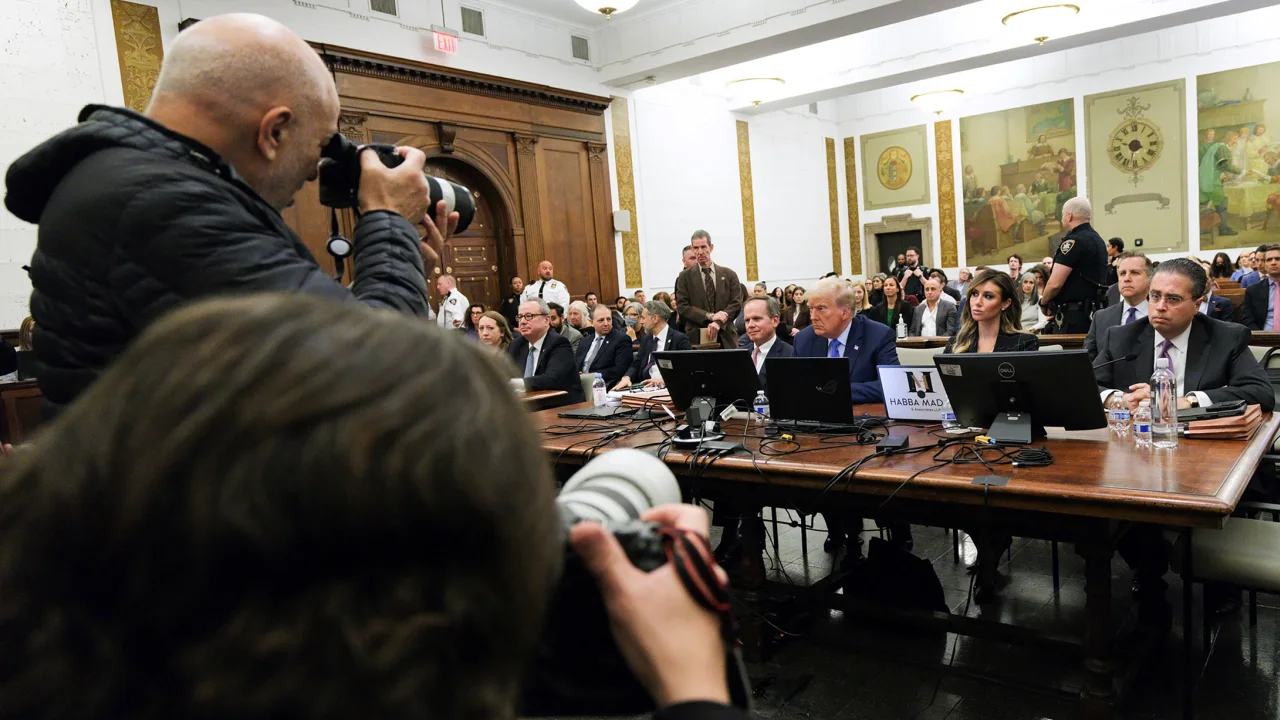
In the highly anticipated legal battles ahead involving former President Donald J. Trump, the question of allowing cameras in federal courts has taken center stage. With Trump facing multiple criminal cases, including allegations of election meddling, mishandling classified data, and falsifying business records, the stakes are high, and the American public is closely watching. Advocates argue that transparency through live broadcasting could address concerns, provide insights into courtroom proceedings, and build public confidence in the justice system.
Trump’s recent civil fraud trial in New York, where he was found liable for fraud, raised questions about the need for transparency. While the trial was not televised, it highlighted the significance of Trump’s testimony under oath. Supporters of camera access believe that broadcasting such moments could prevent the former president from dismissing evidence as a political conspiracy.
Trump’s Behavior Under Scrutiny
During the civil trial, Trump, accompanied by his attorneys Chris Kise and Alina Habba, faced tough questioning about his financial disclosures. Under oath, Trump’s attempts to deflect attention from the core issues highlighted the importance of capturing these interactions on camera. The upcoming criminal trials, especially those related to election meddling, are expected to be crucial in shaping public opinion, particularly in key states.
The Impact on the 2024 Election
The outcome of these trials is expected to play a pivotal role in the 2024 election. Polls conducted by The New York Times and Siena College suggest that a conviction could sway voter preferences, potentially influencing the election’s outcome. Convincing around 6 percent of voters across key states to switch their support to Trump’s opponent, these trials hold immense political significance.
Advocates’ Perspective
Media organizations, including CNN, have filed motions seeking an exception to the current federal court policy prohibiting the broadcast of court proceedings. They argue that transparency is essential, especially in polarized times where misinformation about the 2020 election persists. Advocates believe that allowing the public access to these trials would enhance trust in the justice system and dispel doubts surrounding the fairness of the proceedings.
Concerns and Counterarguments
While proponents advocate for transparency, concerns have been raised about potential security risks and the impact on witnesses and jurors. Federal prosecutors have expressed worries about witness testimony being affected if their images circulate on social media. However, advocates like Gabe Roth, executive director of Fix the Court, argue that security concerns can be mitigated without compromising public access, emphasizing that open societies should embrace transparency.
Path Forward
The debate over cameras in courtrooms is not new, with periodic reconsideration of the policy dating back to 1946. Recent events, including the Covid-19 pandemic, have prompted discussions about adapting to modern needs. While Supreme Court arguments are now recorded and posted online, there remains resistance from some quarters, including the Judicial Conference of the United States, chaired by Supreme Court Chief Justice John Roberts.
With the Judicial Conference unlikely to make a special exception for the Trump cases, advocates are left with two options: federal judge Tanya Chutkan could make an exception based on media organizations’ requests, or Congress could step in and change the rules by statute. Bipartisan support for transparency in the courts, exemplified by proposals to allow cameras in the Supreme Court, indicates a willingness to address this issue at a legislative level.
As the nation waits for these high-profile trials to unfold, the question of transparency in the courtroom remains unresolved. The decision on whether to allow cameras could shape not only the public’s perception of these legal battles but also the broader discourse surrounding the justice system in the United States.


