

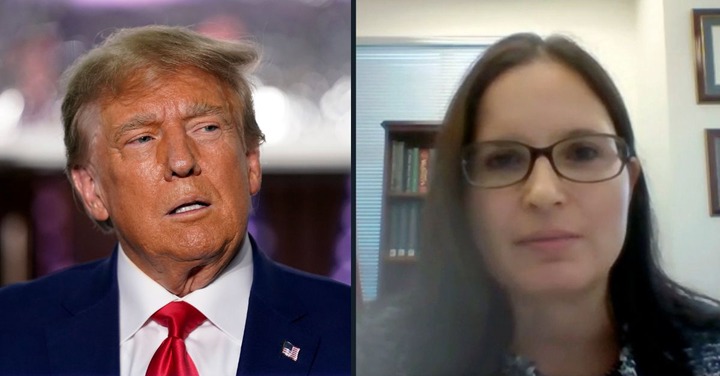
In a decisive move that underscores the commitment to transparency in legal proceedings, U.S. District Judge Aileen M. Cannon, overseeing the Mar-a-Lago case involving former President Donald Trump, has rejected Special Counsel Jack Smith’s request to keep documents under wraps.
As reported by Law & Crime on Monday, December 4, 2023, Judge Cannon made the significant decision to unseal documents related to the prosecution of Donald Trump, dismissing concerns raised by Special Counsel Jack Smith about the potential exposure of classified information.
The unsealing of the documents, initially filed by the Special Counsel’s Office on November 22, follows Smith’s worries regarding the divulgence of the “contours and extent” of the government’s plans to remove classified information from shareable discovery.
In a notable demonstration of transparency, Judge Cannon, cognizant of the public’s right to access judicial documents, issued a paperless order to unseal the previously classified materials.
Smith, anticipating the sensitive nature of the information, had previously sought permission to file an ex parte motion, visible only to the judge, aimed at exceeding page limits. This motion was directly linked to the Classified Information Procedure Act (CIPA) Section 4 motion, focusing on highly classified information.
Despite Smith’s argument for “judicial economy” and the need to protect sensitive information, Judge Cannon, appointed by Trump, rejected the procedural motions on November 28. She emphasized that the motions lacked sufficient justification for ex parte filing and stressed the importance of the adversarial system of justice.
In response to the judge’s decision, Smith conveyed on December 1 that the government and the defense had discussed unsealing several documents on the docket. While the Special Counsel did not oppose the release of most documents, except for two requiring “limited redactions,” the defendants reserved the right to challenge the request later.
Smith clarified the rationale behind initially seeking an ex parte filing, explaining that it was ancillary to a proceeding that would have exposed unclassified but revealing information about the government’s planned CIPA Section 4 motion.
The court’s rejection prompted the government to provide unredacted versions of the documents to the defense, eliminating the justification for continued secrecy. Consequently, the Special Counsel did not object to the unsealing of two specific documents, ECF Nos. 223 and 224, acknowledging that there was no longer a basis for keeping them from the public.
This legal clash between the Special Counsel and the court highlights the delicate balance between transparency and safeguarding classified information in high-profile cases. Judge Cannon’s adherence to established procedures underscores the importance of maintaining fairness in the legal process, even when dealing with sensitive matters.
As the unsealed documents become public, observers will undoubtedly scrutinize the contents, seeking insights into the intricacies of the government’s case against Trump and his associates at Mar-a-Lago.


