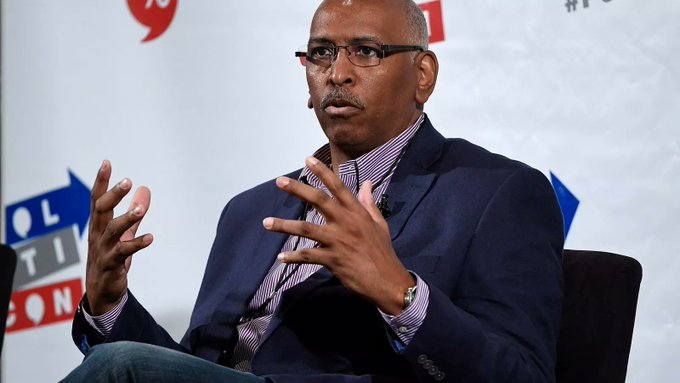
Former Republican National Committee (RNC) Chair Michael Steele recently posed a compelling question that resonated across political circles: why does the Supreme Court seem immune from scrutiny amid scandals? This query, echoing concerns of many Americans, delves into the complexities of judicial oversight and accountability.
Steele’s remarks come at a time when the nation’s highest court is under heightened scrutiny. Issues such as conflicts of interest, ethical lapses, and the perception of partisan bias have cast shadows over the Court’s integrity. However, unlike other branches of government, the Supreme Court operates with limited oversight and transparency, raising questions about its accountability to the public.
One of the key concerns raised by Steele is the apparent lack of consequences for justices involved in controversies. While other government officials face scrutiny, investigations, and potential repercussions for their actions, Supreme Court justices often enjoy a level of immunity from such processes. This disparity in accountability has sparked debates about the need for reform within the judicial branch.
The Supreme Court’s insulation from traditional checks and balances stems from its unique role as the final arbiter of legal disputes. Justices are appointed for life, shielded from electoral pressures that affect other branches of government. While this independence is crucial for upholding the rule of law, it also raises questions about how to ensure transparency and accountability within the Court.
Steele’s question underscores a broader conversation about the balance between judicial independence and accountability. Many argue that while the Court must remain free from political influence, it should also be subject to mechanisms that hold it accountable for ethical lapses and misconduct. Calls for greater transparency, ethics oversight, and mechanisms for addressing conflicts of interest within the Court have gained traction in recent years.
In response to concerns about the Supreme Court’s perceived immunity from scandals, some advocates have proposed reforms such as term limits for justices, increased disclosure of financial interests, and a formalized ethics review process. These proposals aim to preserve the Court’s independence while enhancing public trust in its integrity and impartiality.
As the debate continues, Steele’s question serves as a catalyst for discussions on the role of the Supreme Court in American democracy. While the Court’s decisions shape the nation’s legal landscape, its internal workings and accountability mechanisms warrant careful examination and potential reform. The quest for a judiciary that is both independent and accountable remains a central challenge in ensuring the strength and legitimacy of the nation’s legal system.