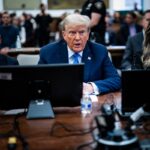
Former President Donald Trump pleaded not guilty to four felony charges related to his alleged attempts to overturn the 2020 presidential election results. The plea was entered before Magistrate Judge Moxila Upadhyaya at a federal courthouse in Washington, D.C., close to where the purported conspiracy unfolded on January 6, 2021.
Present in the courtroom with Trump were his attorneys Todd Blanche and John Lauro, as well as Special Counsel Jack Smith and the prosecutors working under him—Thomas Windom, Molly Gaston, and Mary Dohrmann.
The Justice Department, represented by Windom, clarified that they were not seeking the former president’s detention. Trump’s release conditions include compliance with federal, state, and local laws and refraining from discussing the case with witnesses, except in the presence of counsel.
Judge Upadhyaya emphasized the critical release condition of not committing new crimes during release, warning that any such actions could lead to detention and potential additional penalties. The first hearing is scheduled for August 28 at 10 a.m. ET, with U.S. District Judge Tanya Chutkan, assigned to the case, expected to set a trial date.
Among those present in the courtroom was Evan Corcoran, an attorney for Trump, who testified before the grand jury investigating the retention of classified documents at Trump’s Mar-a-Lago resort.
Trump’s court appearance follows a federal grand jury indictment two days earlier, outlining charges of conspiracy to defraud the United States, witness tampering, conspiracy against citizens’ rights, and obstruction of an official proceeding.
In response to the charges, Trump, the leading figure in the Republican presidential primary, denounced them as election interference, expressing concern about the persecution of a frontrunner. He reiterated this sentiment at the airport after the hearing, asserting that such actions should not occur in America.
The case delves into the heart of the alleged efforts to overturn the 2020 election, forming part of the extensive Department of Justice investigation into the events of January 6, 2021. This indictment adds to Trump’s legal challenges, including federal charges related to obstructing an investigation into classified documents and separate legal issues in Manhattan, a defamation lawsuit, and a grand jury investigation in Georgia.
Trump’s steadfast refusal to accept the election results, marked by false claims and numerous lawsuits, escalated in the weeks following the election. Despite courts rejecting fraud allegations, Trump persisted in pushing these claims, raising substantial funds in the process.
As 2020 concluded, Trump intensified pressure on then-Vice President Mike Pence to aid in maintaining his office. Legal theories proposed by outside attorney John Eastman, involving rejecting Electoral College votes, were rejected by Pence, who deemed them unconstitutional. Simultaneously, Trump advisers pursued a fake-elector scheme in several states, but Pence ultimately refused to block Biden’s certification.
On January 6, 2021, as Congress convened to certify the Electoral College count, Trump hosted a rally near the White House, where he repeated false claims and urged the crowd to “fight like hell.” Subsequently, a group of Trump supporters marched to the Capitol, leading to chaos, injuries, and the storming of the Capitol building.