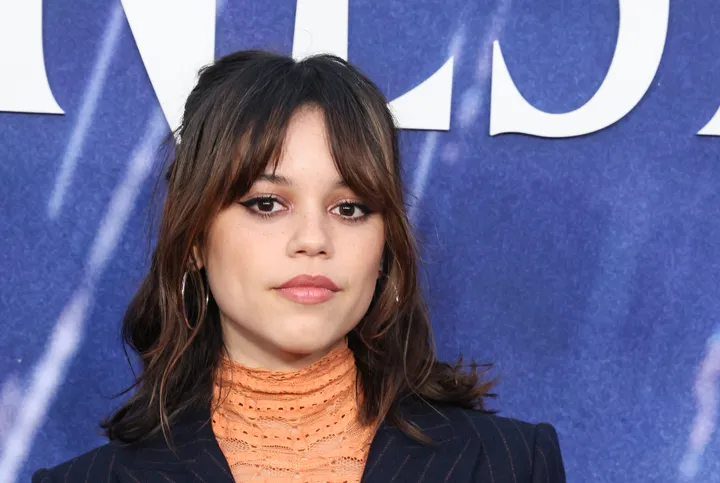
Jenna Ortega is sharing her personal struggle with feeling “just not good enough” to represent her Latinx heritage amid past criticism over her Spanish fluency. The “Wednesday” star recently addressed these concerns in a candid interview with Vanity Fair.
Last September, Ortega faced backlash from some social media users who questioned her authenticity as a Latina. The controversy began after a viral clip from a fashion show in Paris showed Ortega, who is of Mexican and Puerto Rican descent, responding in English when Anya Taylor-Joy greeted her in Spanish.
In her Vanity Fair interview, Ortega expressed her feelings of shame and discomfort regarding her connection to her roots. “I think there’s a part of me that carries a bit of shame. For a second, I was almost nervous to speak about my family’s background,” she revealed. Ortega admitted that the criticism can feel disheartening, making her feel as though she is “just not good enough.”
Ortega’s father, Edward Ortega, and she herself do not speak Spanish fluently, although her mother speaks it as her first language. Despite this, Ortega emphasized that she is learning not to shoulder the entire weight of representing her heritage. “It’s not my job to carry the weight of everybody who’s ever had that experience,” she said.
The actress also touched on the broader issue of Latinx representation in Hollywood. She pointed to actors like Pedro Pascal and Aubrey Plaza as examples of Latinx talent making waves in the industry. Ortega advocates for more robust and authentic portrayals of Latinx characters, urging a collective effort to create impactful stories. “There needs to be a little more faith in what we bring to the table,” she said.
Regarding her role in “Wednesday,” Ortega defended the series’ portrayal of her character’s Latina identity. While some critics have labeled it as “undercooked” due to the lack of Spanish language use, Ortega appreciates the show’s subtle approach. “There’s nothing worse than when they have the side Mexican character who’s carrying the flag on their shoulder,” she noted. “We’re so much more than that.”
Ortega’s reflections highlight the complex dynamics of cultural representation and identity, emphasizing the need for genuine and nuanced portrayals in media.