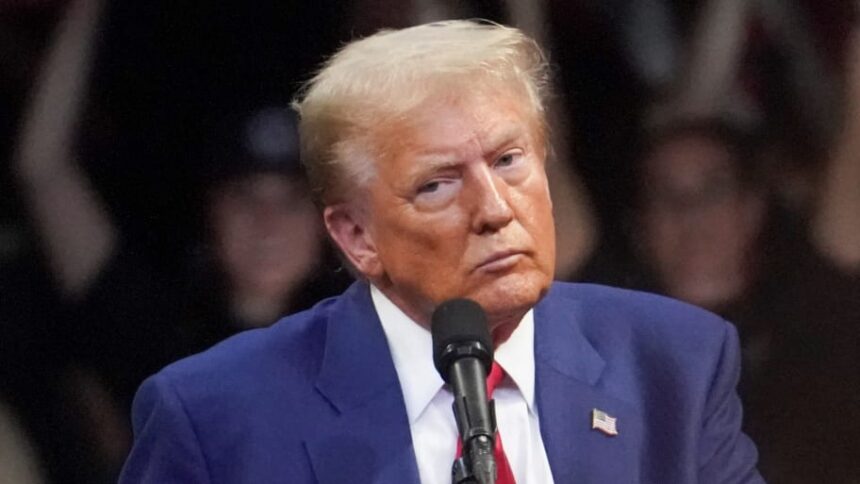
Donald Trump has once again canceled a scheduled interview with mainstream media, this time with CNBC’s business show Squawk Box. The sudden withdrawal, revealed by Joe Kernen, the conservative-leaning anchor of the show, has raised eyebrows. Kernen made the announcement during an interview with Charles Phillips, the Oracle chairman and supporter of Vice President Kamala Harris, stating simply, “Trump canceled.”
The interview, initially planned as an in-studio sit-down for later this week, was never officially announced. Sources suggest that Trump’s campaign had initially agreed to the appearance but later backed out. This cancellation marks a continuation of Trump’s strategy to avoid mainstream media outlets, favoring interviews with more sympathetic platforms like Fox News, where he regularly speaks with hosts like Maria Bartiromo, and various podcasters, such as comedian Andrew Schultz.
One potential reason for this move could be the presence of Andrew Ross Sorkin, a New York Times journalist and co-host of Squawk Box, who has been critical of Trump in the past. Sorkin’s inclusion, alongside Kernen, could have made the interview less favorable for Trump.
This decision comes amid growing scrutiny over Trump’s economic policies as he prepares for the 2024 election. Despite the cancellation, Trump’s public schedule indicates he is set to be interviewed by Bloomberg and deliver a speech to the Economic Club of Chicago, showcasing his economic agenda on other platforms.
A Pattern of Selective Media Engagement
Trump’s recent cancellations highlight his ongoing strategy of avoiding interviews with mainstream outlets known for tougher questioning. Earlier this year, Trump abruptly ended his participation in an interview with CBS’s 60 Minutes. Instead, he has gravitated toward outlets with more sympathetic hosts and environments. His approach appears aimed at controlling the narrative and reducing the risk of challenging questions about his policies and record.
This media strategy could play a significant role in shaping how Trump presents himself leading up to the 2024 presidential election. As he continues to pull out of mainstream interviews, the focus shifts to how this selective media engagement will impact his campaign and public perception.
The cancellation of the CNBC interview adds to a series of similar incidents, reflecting Trump’s preference for media outlets where he can navigate interviews on his terms. How this affects his outreach to undecided voters or those looking for in-depth insights into his policies remains to be seen.