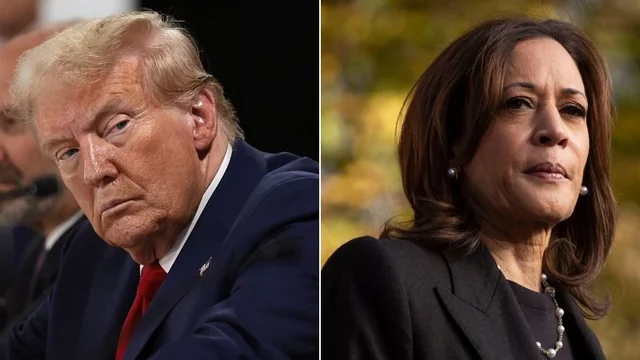
A letter signed by over half of the living U.S. Nobel Prize winners in economics has declared Vice President Kamala Harris’ economic agenda “vastly superior” to the proposals of former President Donald Trump. This endorsement, which includes two of the three most recent laureates, emphasizes the significant differences in economic philosophy between the two candidates as Election Day approaches.
The letter highlights that despite differing views on specific policies, the economists agree that Harris’ agenda will enhance the nation’s health, investment, sustainability, resilience, employment opportunities, and fairness. In their words, it stands in stark contrast to what they describe as the “counterproductive economic agenda of Donald Trump.” This endorsement arrives as voters increasingly prioritize economic issues, particularly in light of ongoing concerns about inflation and the state of the U.S. economy.
Joseph Stiglitz, a Columbia University professor and 2001 Nobel Prize winner, spearheaded this initiative. This letter marks the second significant intervention in the campaign by a coalition of Nobel laureates, following an earlier effort warning about the destabilizing effects of a potential second Trump term. Stiglitz previously collaborated with fellow laureates to assert that Biden’s economic plans were superior.
In response to the initial letter, Trump dismissed the economists as “worthless out of touch” individuals, a sentiment echoed by his campaign. However, the latest letter has broadened its scope, incorporating seven new signatories and representing diverse areas of expertise. Among these new signatories are Simon Johnson and Daron Acemoglu, who recently won the Nobel Prize for their work on how institutions affect a nation’s prosperity.
At just 228 words, the letter is concise yet impactful, aiming to unify the economists’ perspectives while succinctly addressing the pressing economic issues at hand. It underscores the risks associated with Trump’s proposed policies, including tariffs and tax changes, which they argue could worsen inflation and significantly increase the federal deficit.
The economists assert that fundamental elements like the rule of law and economic certainty are essential for economic success, warning that Trump’s approach threatens these principles. They highlight his pledges regarding tariffs and deregulation as potential destabilizing factors.
Despite ongoing warnings from experts, Trump remains resolute in his support for tariffs, promoting them as central to his economic strategy. He insists that these tariffs would yield significant benefits, declaring, “The most beautiful word in the dictionary is tariff.” However, economists typically view tariffs as taxes imposed on consumers purchasing imported goods.
As Trump touts sweeping tax cuts beyond his 2017 tax law and proposes eliminating taxes on tips, overtime, and Social Security benefits, analysts caution that such measures could cost trillions of dollars. His strategy relies on tariffs and projected economic growth to offset potential revenue losses.
Historically, Trump has maintained an advantage among voters concerning economic management, particularly amid rising dissatisfaction with the economy. Nonetheless, recent polling suggests that Harris has been gaining ground on this issue, with her campaign identifying opportunities to further undermine Trump’s economic credibility.
Support for Harris has been buoyed by positive economic indicators, including a robust job market, declining unemployment rates, and solid retail sales. With the Federal Reserve beginning to lower interest rates, there is a growing sense of confidence among policymakers that inflation is being effectively managed without triggering a recession.
Harris’ economic agenda directly addresses voter concerns regarding high prices, housing costs, and care for children and the elderly. Additionally, she endorses Biden’s industrial policies aimed at strengthening U.S. manufacturing in key sectors.
As the election draws closer, the distinct economic philosophies of Harris and Trump are becoming increasingly clear. According to the economists, Harris’ approach promises a stronger economic future characterized by sustainable growth and greater equity. They conclude, “Simply put, Harris’s policies will result in a stronger economic performance, with economic growth that is more robust, more sustainable, and more equitable.”