

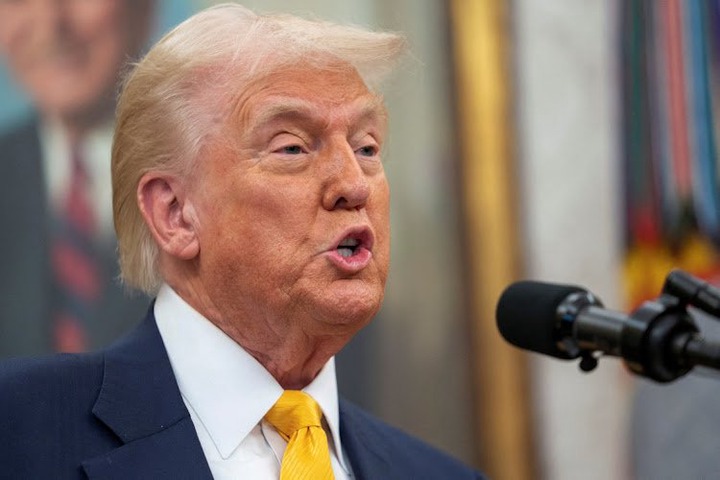
US President Donald Trump has made a striking statement: efforts to de-escalate the Russia-Ukraine war are “somewhat under control.” While his words suggest progress, the reality of the situation remains far from certain. With the conflict stretching on for more than two years, any glimmer of hope for peace is bound to raise both optimism and skepticism.
During an exclusive interview aboard Air Force One with Clay Travis, founder of the sports website Outkick, Trump emphasized the importance of “rational discussions” and his personal relationships with Russian President Vladimir Putin and Ukrainian President Volodymyr Zelensky. He painted himself as a key mediator in the ongoing crisis, stating that diplomacy and strong personal ties with both leaders are crucial to negotiating an end to the war. But is this enough to bring real change, or is it just another political maneuver?
The Ceasefire That Almost Happened
Last week, Trump held separate talks with both Putin and Zelensky in an effort to secure a 30-day ceasefire. While that goal wasn’t fully achieved, the discussions did result in a temporary agreement: Putin pledged to halt attacks on Ukraine’s energy infrastructure for 30 days, and Zelensky indicated he would reciprocate the gesture. Though this isn’t the full-scale ceasefire Trump aimed for, it marks one of the rare moments in recent months where both sides have shown even the slightest willingness to step back from full-blown escalation.
But how significant is this agreement in the grand scheme of the war? Critics argue that a temporary halt in attacks on energy facilities does little to change the overall battlefield dynamics. Ukraine still faces relentless Russian aggression, and Putin has not signaled any intention to withdraw forces or engage in comprehensive peace negotiations. Meanwhile, Zelensky remains adamant that any resolution must include Ukraine reclaiming its occupied territories—a stance unlikely to be accepted by the Kremlin.
Trump’s Diplomatic Gamble
Trump has long positioned himself as a master negotiator, often touting his ability to strike deals that others cannot. His approach to foreign policy has always been unconventional, favoring personal relationships and one-on-one meetings over traditional diplomatic channels.
His rapport with Putin has been a point of controversy, with critics accusing him of being too lenient on the Russian leader. At the same time, his support for Ukraine has also been questioned, particularly following his impeachment in 2019 over allegations that he withheld military aid to pressure Zelensky into investigating political rival Joe Biden.
Now, as Trump seeks to assert his influence on the global stage once again, the question remains: Can he truly broker peace, or is this just another example of his signature grandstanding? His claim that the war is “somewhat under control” suggests he sees progress where others might see mere political theater.
The Broader Geopolitical Landscape
The Russia-Ukraine war is not just a bilateral conflict; it has far-reaching global implications. Western nations, including the US and European allies, have poured billions of dollars into supporting Ukraine through military aid, economic assistance, and sanctions against Russia. The war has strained global energy markets, disrupted supply chains, and reshaped international alliances.
If Trump is serious about brokering peace, he will need to navigate these complex geopolitical dynamics. Putin is unlikely to make concessions unless he sees a direct benefit, and Zelensky cannot afford to agree to terms that compromise Ukraine’s sovereignty. Meanwhile, NATO and European leaders will have their own expectations and conditions for any potential agreement.
Trump’s ability to manage these competing interests will determine whether his diplomatic efforts yield real results or simply serve as headline fodder.
What Comes Next?
While the 30-day pause in attacks on energy infrastructure is a small step, it does not equate to a ceasefire or a roadmap to peace. Fighting continues on the front lines, and Ukraine remains steadfast in its resistance against Russian advances. Putin, on the other hand, has shown no signs of retreating from his broader objectives.
Many political analysts argue that Trump’s announcement is more about shaping public perception than reflecting actual progress on the ground. With the 2024 US presidential election approaching, his handling of the Russia-Ukraine war could become a major talking point. By presenting himself as a peacemaker, he may be seeking to bolster his image as a leader capable of resolving global crises—an image that could prove valuable in an election campaign.
At the same time, Ukrainians and the international community will be watching closely to see if Trump’s words translate into tangible results. Will the temporary pause lead to broader negotiations, or will hostilities resume as soon as the 30 days are up?
Final Thoughts
Trump’s claim that the war is “somewhat under control” raises more questions than it answers. While his negotiations with Putin and Zelensky have produced a short-term agreement, they have not yet led to meaningful peace talks or a clear path to ending the war.
For now, the world remains on edge, waiting to see whether this moment of diplomatic engagement will be the start of something bigger—or just another fleeting pause in an ongoing and devastating conflict.


