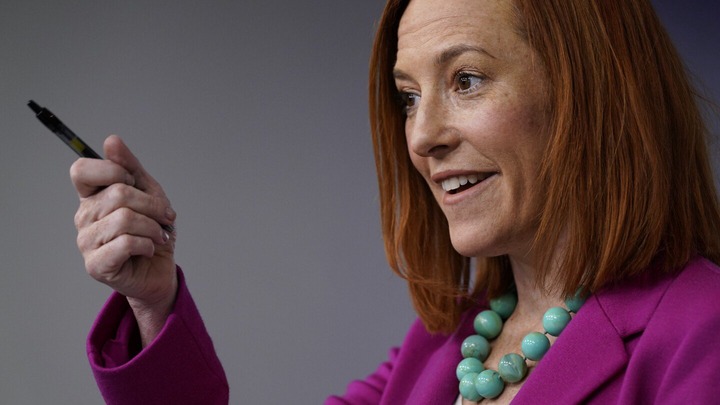
Starting May 6, Jen Psaki will be stepping into MSNBC’s coveted 9 p.m. Eastern prime-time slot, succeeding Rachel Maddow on weekdays. As Maddow transitions to a once-a-week schedule on Mondays, Psaki will bring her distinct voice and background to a new show, The Briefing, replacing her Sunday program, Inside. This shift marks a significant moment for the network, as Psaki’s rise is part of MSNBC’s broader strategy to adjust under new leadership.
Having spent years as White House Press Secretary during President Joe Biden’s first term, Psaki is no stranger to high-stakes communication. But this move from Sunday evenings to prime time comes with its own set of expectations. “Part of my job,” she told The Associated Press, “is to tell stories of hope” in what has been a challenging time for many MSNBC viewers. Her new show promises a mix of big-name guests, policy discussions, and fresh perspectives—all while taking cues from her time working under political heavyweights.
For viewers familiar with Maddow’s long-standing influence on MSNBC, Psaki recognizes the tough task of filling such big shoes. “There’s only one Rachel Maddow,” Psaki acknowledged. “She’s built an incredible connection with her audience over 17 years.” Though their styles differ, Psaki hopes to bring some of Maddow’s dedication and fearless storytelling to her own show. Drawing from her vast experience in Washington, D.C., Psaki plans to add clarity to complex political situations, bringing viewers along as she navigates the fast-changing landscape of American governance.
Her approach will also include addressing issues like the future of the Democratic Party, and at times, offering surprising guests to spark meaningful conversations. The program’s name change—The Briefing—reflects a desire to shift away from the notion that “insiders have all the answers,” a message Psaki is eager to challenge in her new role.
As for the political dynamics of the moment, Psaki didn’t shy away from discussing the current state of the White House press room. Reflecting on Karoline Leavitt’s performance as White House Press Secretary, Psaki offered a candid perspective, emphasizing that the role goes beyond simply commanding a room—it’s about transparency and providing accurate, timely information.
This transition comes amid a time of reflection for both MSNBC and its viewership, with Psaki positioned to steer the conversation through the turbulent waters of American politics. As viewers tune in, they can expect a fresh yet familiar perspective that brings insight, clarity, and perhaps a bit of hope during uncertain times.