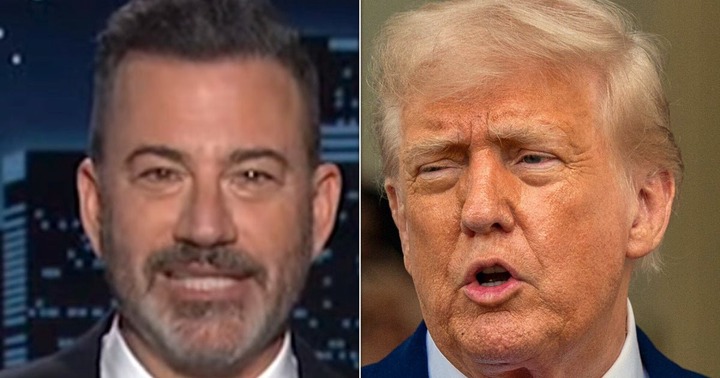
Late-night talk show host Jimmy Kimmel is no stranger to roasting politicians, and his latest target is none other than President Donald Trump. Kimmel used his platform to deliver a biting commentary on the president’s recent trade deal with the United Kingdom, which he believes is more damaging to Trump’s loyal supporters than they might think. In his signature comedic style, Kimmel pointed out the glaring contradictions in Trump’s policy and how the new deal ultimately benefits the wealthy while hitting working-class Americans the hardest.
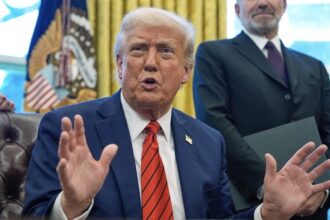
In his monologue, Kimmel wasted no time in getting to the heart of the issue: Trump’s announcement of a trade deal that triples tariffs on British goods. The deal, which Trump hailed as a major accomplishment, raises taxes on a variety of imported goods from the UK. Kimmel, however, wasn’t impressed by the president’s self-congratulations. “He is very proud of himself for making a trade agreement with a country we were trading with just fine until he screwed it all up,” Kimmel said, mocking the idea that Trump was somehow achieving something groundbreaking by negotiating a new deal with a nation the U.S. had already maintained trade relations with.
The deal itself is controversial for a number of reasons, but Kimmel focused on how it would impact American consumers—particularly Trump’s core supporters. The increased tariffs will likely lead to higher prices on British goods, and Kimmel was quick to highlight how this could hurt the everyday Americans who support Trump. While Trump continues to argue that his trade policies are designed to bring jobs back to the U.S. and protect American industries, many experts believe the tariffs will only lead to price hikes for consumers, especially on products that aren’t easily replaceable with domestic alternatives.
One of the most notable aspects of the deal, as Kimmel pointed out, is the special exemption made for luxury British brands like Rolls-Royce. While most imported cars from the UK will face a 25% tariff, Rolls-Royce and other high-end brands will see a reduced tariff of just 10%. This move has raised eyebrows, as it appears to cater more to the wealthy elite than to the average American worker. Kimmel couldn’t resist pointing out the irony: “Rest easy, Ma and Pa MAGA hat,” he quipped. “You’re still going to lose the farm, but now you can only pay 10% more on that Rolls-Royce you’ve been eyeing.”
Kimmel’s mockery highlights an uncomfortable truth: while Trump continues to frame himself as a champion of the working class, many of his policies appear to benefit the rich more than the average American. The reduced tariff on luxury vehicles may seem like a small detail in the grand scheme of things, but it’s a telling example of how certain policies disproportionately favor the wealthy, even when they’re sold as being beneficial to all Americans. By creating an exception for high-end brands, Trump is effectively signaling that his priorities lie with the elite, rather than with the struggling farmers, factory workers, and everyday Americans who form the backbone of his political base.
This isn’t the first time that Trump’s policies have been at odds with the interests of his supporters. Over the years, many of his trade deals and economic decisions have sparked concerns among working-class voters who feel left behind by globalization and corporate influence. The trade war with China, for example, led to significant losses in the agricultural sector, with American farmers bearing the brunt of retaliatory tariffs. Despite Trump’s promises to help these workers, many are still struggling, and Kimmel’s critique serves as a reminder that the economic policies of the Trump administration may not be delivering the benefits he promised.
Kimmel’s commentary also sheds light on the broader issue of trade deals and tariffs in the context of American politics. While Trump has positioned himself as a tough negotiator who is willing to take on foreign countries to protect American interests, the reality is that tariffs often end up hurting consumers more than they help domestic industries. Higher tariffs on imported goods mean higher prices for everyday items, and those costs are typically passed down to consumers. The president’s trade policies may have some short-term benefits for certain industries, but they also carry significant long-term risks for the average American household.
Furthermore, Kimmel’s focus on the UK deal underscores the absurdity of the president’s stance on trade. By framing the agreement as a “win” while raising prices on goods Americans have been purchasing for years, Trump is essentially asking his supporters to accept higher costs in exchange for a deal that many would argue doesn’t actually improve the country’s economic situation. Kimmel’s jest about the Rolls-Royce tariff exemption serves as a metaphor for the larger issue at play: Trump’s trade policies may sound good on paper, but they’re often more beneficial to the wealthy and the elite than to the working-class voters who helped get him into office.
For Kimmel, this is a clear example of how Trump’s rhetoric often fails to match reality. While the president talks a big game about protecting American workers and bringing jobs back to the U.S., the results of his policies often don’t live up to the hype. The tariff deal with the UK is just the latest example of how Trump’s actions seem to benefit the rich and powerful at the expense of ordinary Americans, even though he continues to present himself as the defender of the working class.
The real question is whether Trump’s base will recognize the disconnect between his promises and his policies. Kimmel’s segment serves as a wake-up call to those who may have been blinded by the president’s populist rhetoric, reminding them that his economic decisions may not always be in their best interest. As the trade war continues to unfold, it remains to be seen whether Trump will be able to deliver on his promises or whether his policies will continue to hurt the very people who put him in power.
Kimmel’s criticism of Trump’s trade deal isn’t just about making fun of the president—it’s a pointed reminder of the deeper issues that are at play in American politics today. The gap between Trump’s promises and his actions continues to widen, and late-night hosts like Kimmel are doing their part to hold the president accountable. Whether or not his supporters will take notice remains to be seen, but one thing is clear: Kimmel’s reality check is a timely reminder of how complex and sometimes contradictory the world of politics can be.