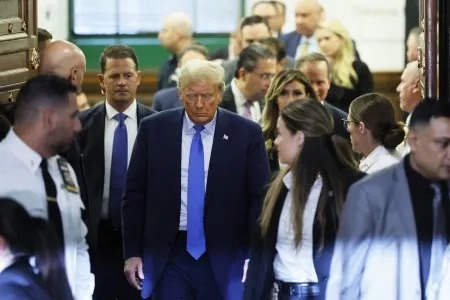
Recent twist in Donald Trump’s legal saga, the former president’s clash with the legal system has escalated as he directs his attention towards the family of Supreme Court Justice Arthur Engoron. This development comes on the heels of a New York appellate court reinstating a mysterious gag order against Trump, raising questions about the boundaries of legal decorum.
The reinstated gag order, without a clear explanation, strategically curtails Trump’s signature attacks on court staff but notably excludes the judge and his family. Undeterred, Trump intensifies his assault, focusing particularly on the judge’s wife. On Trump’s Truth Social platform, he boldly accuses, “This is the Judge’s Wife and Family that are putting these things out,” further painting a picture of injustice and decrying what he calls “the most unfair trial in the history of New York.”
Accompanying his impassioned post is a tweet, allegedly from the judge’s wife, featuring images of Trump in an orange prison jumpsuit. The tweet’s authenticity is under scrutiny, deepening the intrigue surrounding the case. The lack of specificity in Trump’s allegations adds to the controversy, leaving room for speculation about which other members of the judge’s “family” he implicates in his social media onslaught.
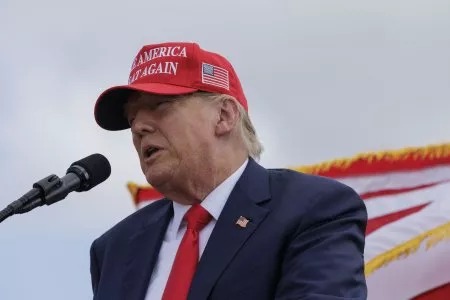
The line between legitimate legal defense and personal vendetta blurs as Trump navigates the complexities of this high-stakes trial. In response to Trump’s allegations, Dawn Engoron, the judge’s wife, vehemently denies any involvement, challenging the tweet’s authenticity and raising questions about misinformation and digital impersonation.
This denial adds complexity to the unfolding narrative, prompting discussions about the intersection of social media, legal proceedings, and the potential consequences of high-profile legal battles playing out in the public eye. The controversy underscores the challenges faced by the legal system in the era of instant information dissemination and digital warfare.
As Trump’s relentless approach to defending himself in the court of public opinion shapes public perceptions of justice, fairness, and the role of social media in legal proceedings, it leaves us pondering the evolving nature of legal battles in the age of social media. The blurred line between legal strategy and personal vendetta ensures that this legal chapter will be remembered not only for its courtroom dynamics but also for its impact on the broader conversation about the intersection of law, social media, and the quest for justice.