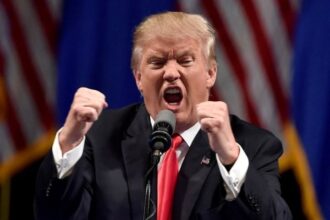
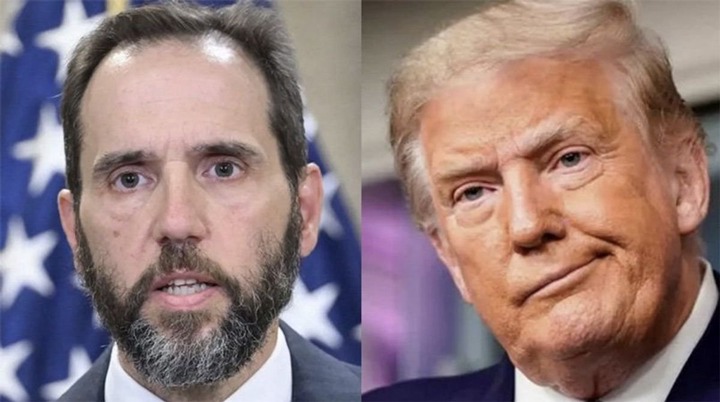
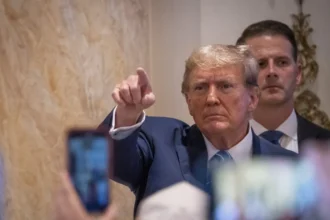
Former President Donald Trump’s recent speech before donors, characterized by a barrage of profanity-laden criticisms against the Biden administration, highlights the deep political divisions prevailing in contemporary American society, according to a report by Raw Story on Sunday, May 5, 2024.
By likening the actions of the Biden administration to the Gestapo, Trump not only seeks to delegitimize Biden’s policies but also taps into the fear and anger of his supporters who perceive the current administration’s actions as overreach. However, such inflammatory language risks distorting reality and trivializing the atrocities committed by actual totalitarian regimes.
Furthermore, the use of profanity in political discourse raises questions about the civility expected from public figures, especially former presidents. While Trump’s unfiltered communication style may energize his base, it reinforces the perception of him as a divisive figure incapable of unifying the nation.
Beyond immediate reactions, Trump’s rhetoric has broader implications for public opinion and policy-making. By framing Biden’s policies in terms of authoritarianism, Trump seeks to discredit them and mobilize opposition against them, hindering constructive dialogue and undermining democratic institutions.

Trump’s critique of Biden’s policies, particularly regarding immigration and law enforcement, reflects deeper ideological differences regarding the role of the state and treatment of marginalized communities. This clash highlights the challenges of finding common ground in a polarized political landscape.
In analyzing Trump’s speech, it’s crucial to consider the broader context of political polarization and media fragmentation. In an era where individuals self-select news sources, leaders like Trump are incentivized to cater to their base with extreme rhetoric, exacerbating divisions and hindering bipartisan solutions.
Ultimately, Trump’s speech exemplifies the deep political divisions and polarized discourse in contemporary America. It underscores the importance of critically evaluating political rhetoric and demanding a higher standard of discourse to foster unity and constructive dialogue.