November election looms, former South Carolina governor Nikki Haley’s stance as a prominent Republican yet to endorse Donald Trump’s presidential bid has drawn significant attention. Speculations abound about whether Haley will eventually endorse Trump to avoid alienating the Republican base and possibly emerge as a vice-presidential contender on Trump’s ticket.
However, aligning with Trump could risk alienating Haley’s supporters, including independents, moderates, and anti-Trump Republicans who have backed her across various states.
Haley’s decision in the coming months will be closely scrutinized by her supporters, allies of Trump, and President Joe Biden’s campaign, as it could significantly impact the general election and her future as a leading Republican appealing to a broad audience.
Biden’s campaign is actively courting Haley’s supporters through the organization of a “Republicans for Biden” group, seen as crucial swing voters. The strategy aims to sabotage Trump’s reelection chances by attracting disenchanted Republicans.
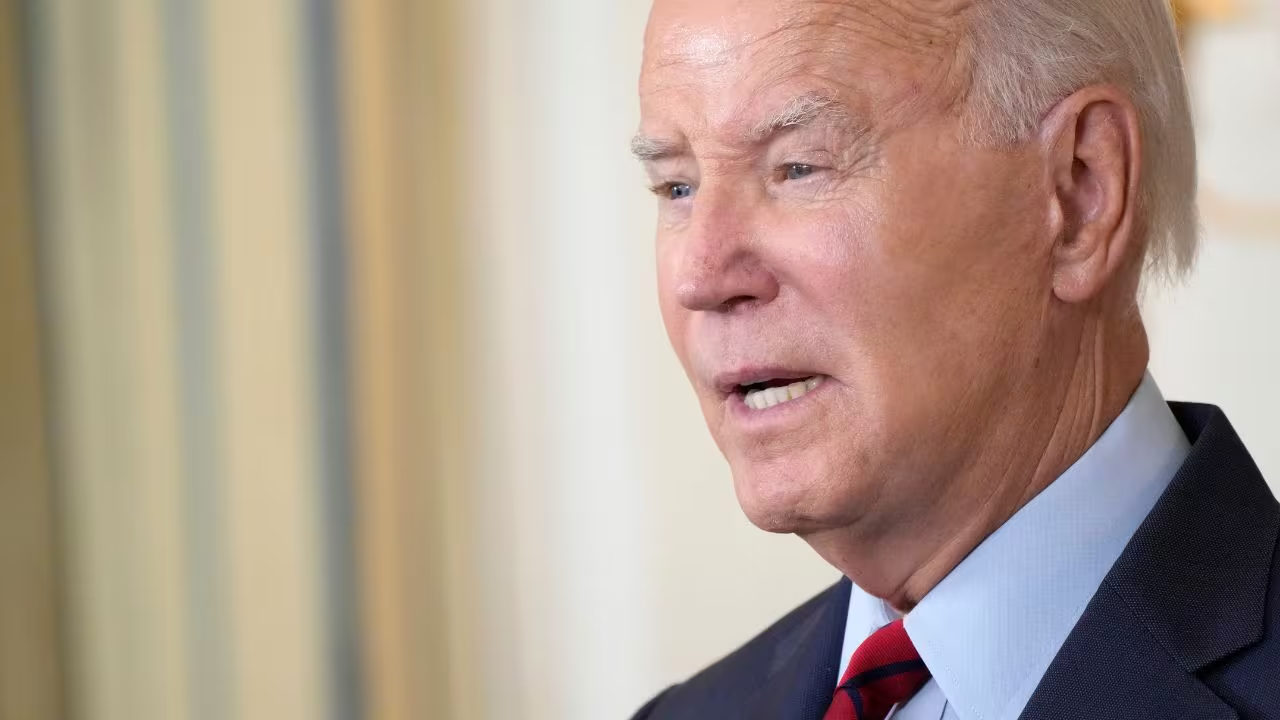
While Trump has neither attacked nor endorsed Haley since her exit from the GOP primary, Biden publicly acknowledged her courage and expressed openness to her supporters.
Biden’s team hopes that Haley and other Trump critics might remain neutral or issue endorsements emphasizing democracy rather than directly praising Biden, aligning with their strategy to appeal to a broader coalition.

Haley’s return to public life, marked by a planned foreign policy speech at the Hudson Institute, signals her emergence from seclusion. However, her complex position and the potential impact of her endorsement remain uncertain, with some supporters warning that endorsing Trump could lead to disillusionment among her base.
The dynamics surrounding Haley’s decision reflect broader efforts by both campaigns to secure crucial swing voters and navigate the complexities of a highly polarized political landscape.