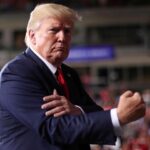
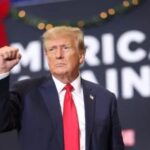
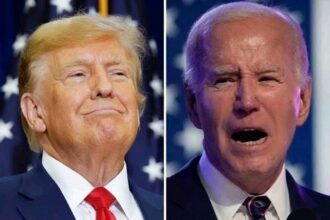
The Colorado Secretary of State declared that former President Donald Trump would be listed on the state’s upcoming ballot, pending Supreme Court intervention, as announced on Friday.
This decision has triggered varied reactions and ignited debates regarding electoral regulations and the role of state officials in shaping the political landscape, according to reports by The Spectator Index on X platform page.
The unexpected announcement, made earlier today, arrives amid ongoing legal battles questioning Trump’s eligibility for public office. The Secretary of State, responsible for overseeing the state’s elections, cited a recent court ruling as the grounds for this determination.
Nevertheless, the ultimate authority rests with the Supreme Court, which holds the power to either uphold or overturn this controversial move.
The legal contention emerged when challenges to Donald Trump’s candidacy eligibility arose, with opponents raising concerns about his ability to fulfill public office responsibilities due to actions taken during his presidency.
The dispute progressed through the courts, culminating in a decision seemingly paving the way for Trump’s potential political return in Colorado.
Critics of the Secretary of State’s decision argue that it establishes a precedent potentially undermining the broader democratic process by granting substantial influence to individual state officials in candidate eligibility matters.
Conversely, supporters assert that the Secretary of State is merely following legal precedents established by recent court rulings. They stress the importance of due process and argue that denying Trump a place on the ballot without clear legal grounds would violate his rights as a prospective candidate.
This development is expected to intensify ongoing political polarization in the United States, with both ends of the political spectrum closely monitoring its implications for the 2024 presidential race and beyond.
Legal experts emphasize the complexity of the case, highlighting the pivotal role of the Supreme Court in shaping Trump’s political future. Constitutional principles, prior precedents, and potential impacts on the democratic process will factor into the court’s decision.
Amid the legal and political turbulence, Colorado voters find themselves central to a high-stakes drama likely to influence their state’s political landscape.
The controversy highlights the delicate balance between state autonomy and federal oversight, prompting questions about the extent of influence state officials wield over national elections.
The Colorado Secretary of State’s decision introduces further uncertainty into the intricate and ever-evolving realm of American politics.
All eyes are now on the Supreme Court, which holds the authority to determine whether Donald Trump’s name will officially grace the Colorado ballot or if this decision will be reversed to preserve the electoral process’s integrity.