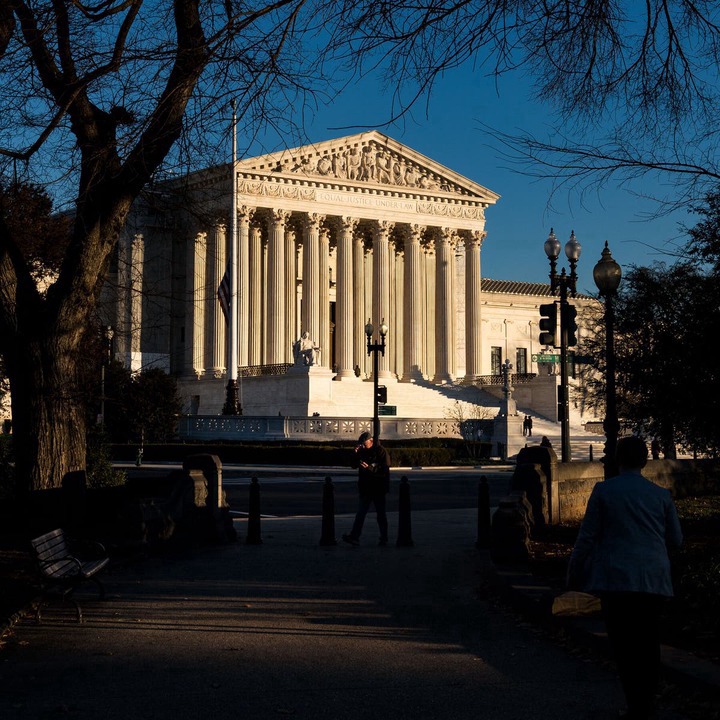
As the U.S. Supreme Court anticipates its January 8 session, the nation stands at the brink of potentially transformative rulings that could redefine the scope of the federal government’s authority, challenging the prevailing norms of the administrative state.
Prominent cases, including SEC v. Jarkesy, CFPB v. Community Financial Services of America, and Loper Bright Enterprises v. Raimondo, are positioned to exert substantial influence on the delicate equilibrium between federal agencies and constitutional limits.
According to NTD on Tuesday, January 2, the spotlight centers on the case of hedge fund manager George Jarkesy, casting a critical eye on the SEC’s handling of securities fraud allegations.
The U.S. Fifth Circuit Court of Appeals contends that the SEC breached constitutional boundaries by conducting internal proceedings, thereby denying Jarkesy a trial by jury.
Supreme Court arguments, held on November 29, delved into the implications of curbing federal agencies’ powers, with Chief Justice John Roberts expressing apprehension over their escalating influence.
The Consumer Financial Protection Bureau (CFPB) finds itself entangled in a legal maelstrom as it endeavors to overturn a ruling deeming its funding structure unconstitutional.
The U.S. 5th Circuit Court of Appeals decision challenges the agency’s actions since its inception in 2011, generating ripples that scrutinize the constitutionality of its funding through the Federal Reserve.
In a case questioning the validity of the Chevron doctrine, the Supreme Court deliberates on whether to overturn a long-criticized aspect of administrative law.
Detractors argue that the doctrine, established in Chevron v. Natural Resources Defense Council in 1984, bestows excessive discretion upon federal agencies.
The potential ramifications of this case extend beyond the specifics, challenging the very framework by which courts defer to agencies’ interpretations of unclear statutes.
Legal experts posit that the outcomes of these cases may wield considerable influence over the functioning of the federal bureaucracy.
Justice Brett Kavanaugh’s acknowledgment that the repercussions extend beyond the SEC to other federal agencies like the EPA and Agriculture underscores the broader implications.
Should the Supreme Court rule against the agencies, it could signify a shift in how federal rules are construed and implemented, introducing a more structured approach.
The Republican opposition to the CFPB, evident in the 2020 Supreme Court ruling, injects a political dimension into these legal battles.
The history of objections to the CFPB, coupled with the broader skepticism of administrative overreach, sets the stage against which these cases unfold. The Supreme Court’s decisions are poised to resonate in both political and regulatory spheres.