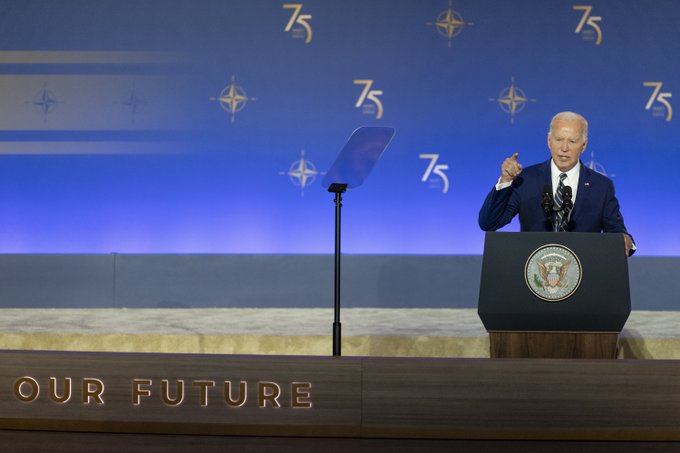
Seventy-five years ago, the leaders of 12 nations gathered at a pivotal moment in history. It had been four years since the end of the most devastating war the world had ever witnessed. In this momentous assembly, they forged a pact that would resonate through the ages — NATO, the most formidable alliance in global history.
The year was marked by profound uncertainty and the harrowing memories of conflict. Yet, amidst the rubble and ruins of war-torn Europe, these visionary leaders convened to shape a new future. Their pledge, solemn and enduring, laid the cornerstone of NATO — an alliance founded on the principles of collective defense, unity, and peace.
Since its inception, NATO has stood as a bulwark against aggression, safeguarding the freedom and security of its member nations. Through decades of geopolitical shifts and challenges, NATO has adapted and strengthened, embodying resilience and solidarity in the face of adversity.
Today, NATO’s mission remains as vital as ever. It continues to promote stability, deter threats, and foster cooperation among its diverse member states. From deterring the Cold War tensions to combating modern-day threats such as terrorism and cyber attacks, NATO has evolved into a cornerstone of global security architecture.
As we reflect on NATO’s 75-year journey, we recognize not only its historic significance but also its ongoing relevance in safeguarding peace and prosperity. The alliance’s commitment to collective defense and shared values serves as a beacon of hope in an ever-changing world.
In conclusion, NATO’s legacy stands as a testament to the power of unity and cooperation in overcoming adversity. As we commemorate this milestone anniversary, let us reaffirm our commitment to the principles that bind us together — strength through unity, security through solidarity.