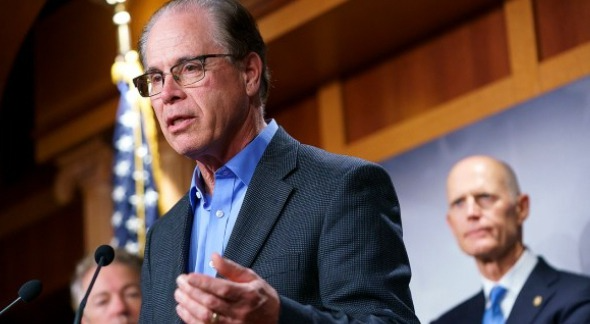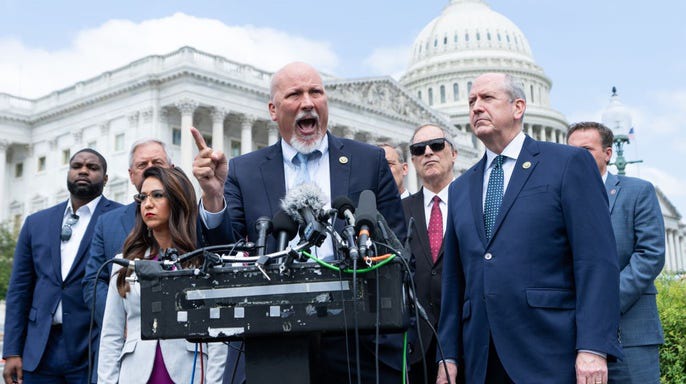
Conservative Republicans, spearheaded by the House Freedom Caucus, are adamantly opposing the bipartisan accord brokered by Speaker Mike Johnson and Senate Majority Leader Chuck Schumer aimed at preventing a government shutdown.
The contentious deal, unveiled on Sunday evening and reported by Fox News on January 8, is encountering fierce resistance from GOP hardliners who contend that the proposed funding levels surpass acceptable limits.
The House Freedom Caucus, a formidable coalition of conservative lawmakers, staunchly opposes the deal, referencing a late December memo that explicitly labeled any funding topline exceeding $1.59 trillion as “totally unacceptable.”
Expressing their dissatisfaction with the deal in a statement posted on X, the Caucus disputes the initially stated $1.59 trillion, asserting the true total programmatic spending level to be $1.658 trillion.
Labeling the deal a “total failure,” the caucus raises concerns about financial implications and accuses Washington of manipulating figures to downplay actual expenditures.
Historically, instances of GOP rebellions during spending negotiations have witnessed conservative lawmakers intentionally obstructing procedural votes, causing delays in government funding bills reaching the floor.
Complicating matters further, the federal funding for some agencies is set to expire on January 19, with all others facing expiration on February 2. The House, operating with a two-seat majority for most of the month due to Majority Leader Steve Scalise’s absence for cancer-related treatment, faces increased pressure to navigate procedural hurdles.
With the tight deadline looming, House leaders may resort to putting spending bills up under suspension, necessitating a two-thirds majority for passage rather than a simple majority. This move heightens the stakes, considering the historical challenges in securing such broad support within the divided chamber.
Reps. Marjorie Taylor Greene and Tim Burchett have openly voiced their opposition to the agreement. Burchett emphasizes the urgent need for substantial cuts to government spending, warning of a potential fiscal cliff.
Greene echoes these sentiments on X, criticizing the deal for lacking measures to secure the border and address concerns about government overreach.
Despite claiming victory in reaching an agreement on a $1.59 trillion statutory topline, Johnson and Schumer face growing resistance from within their own party.
The proposed plan incorporates a side deal between ex-Speaker Kevin McCarthy and President Biden, with Johnson asserting an additional $16 billion in spending cuts to offset this agreement.
Prominent Republicans, including Rep. Chip Roy of Texas, criticize the spending level, deeming it “terrible” and asserting that it undermines previous negotiations between McCarthy and Biden.
Amid conflicting opinions within the GOP, a party aide defends the deal, stating it maintains similar spending levels as the Fiscal Responsibility Act but with additional cuts.
As Congress officially resumes on January 9, the divisive nature of this deal sets the stage for a turbulent start to the legislative year, with potential ramifications for the country’s financial stability and the functioning of essential government services.