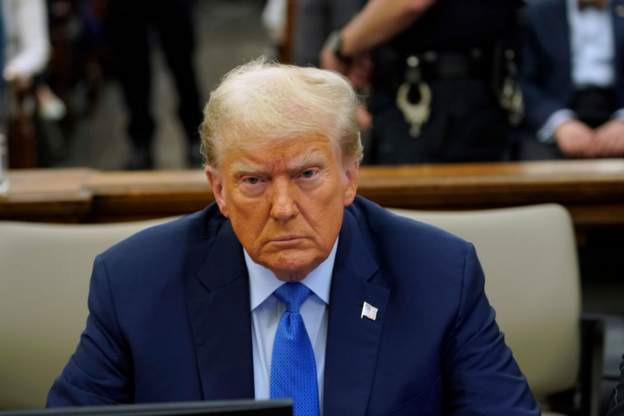
Former President Donald Trump has stirred significant controversy with his latest claims that the FBI orchestrated an assassination attempt against him. The assertions, made during a rally at Greenbrier Farms on June 28, 2024, and detailed in a tweet by Republican Against Trump on July 30, have ignited a firestorm of debate and criticism.
According to Trump’s statements, the assassination attempt occurred during a recent campaign event in Pennsylvania, where a shooter opened fire, resulting in one fatality and several injuries. Trump has suggested that the FBI might have been involved, a claim that has been widely condemned as a dangerous conspiracy theory.

Critics argue that Trump’s allegations not only promote misinformation but also undermine public trust in law enforcement agencies. The reaction has been swift and severe, with many accusing Trump of further polarizing the electorate and potentially alienating moderate voters as the 2024 presidential election looms.

Political analysts are concerned that Trump’s tendency to frame political challenges as personal attacks could deepen divisions within the Republican Party. Some GOP members are already distancing themselves from Trump’s controversial rhetoric, reflecting a growing divide within the party. This internal conflict is further complicated by Trump’s recent popularity on TikTok, a platform where he contrasts sharply with the more cautious approach of many Republican leaders.
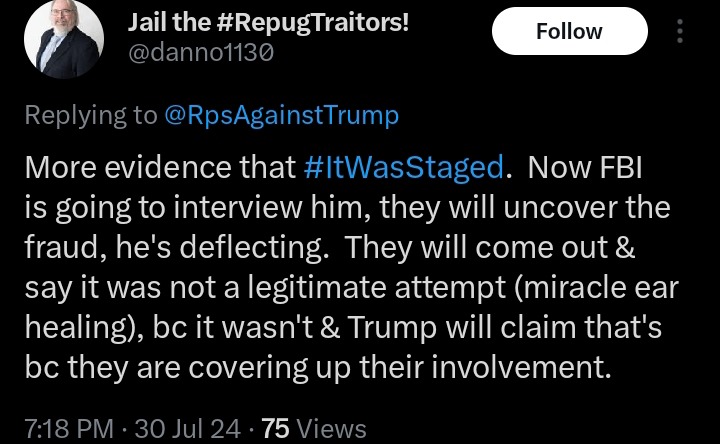
The backlash against Trump’s claims extends beyond social media. The discussion has sparked broader conversations about the role of misinformation in political discourse and the challenges faced by the Republican Party in balancing Trump’s base with a wider electorate that may be wary of his extreme rhetoric.

Social media reactions to Trump’s claims reveal a spectrum of opinions. Some users criticized the allegations as wild and unfounded, stressing the importance of staying grounded and fact-based. Others pointed out perceived inconsistencies, suggesting that if the FBI were involved, they would have used more precise methods. There were also concerns about the potential for these accusations to be part of a larger strategy to deflect criticism or manipulate public perception.

Following the attack, Trump expressed disbelief at his survival, attributing it to “luck or by God.” He recounted the moment he was shot in the ear, describing the chaos and his instinctive reaction to duck for cover. Despite the dramatic account, Trump emphasized his commitment to uniting the country, asserting that he is “supposed to be dead” but remains determined to continue his political efforts.
As the election approaches, the Republican Party faces the complex task of addressing the implications of Trump’s statements and navigating the impact on their broader political strategy.