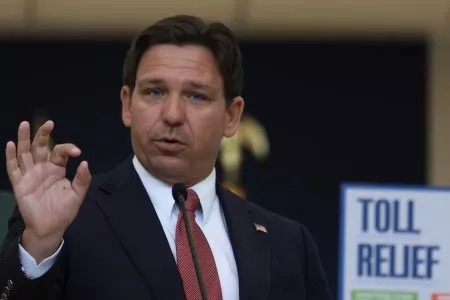
Florida Governor Ron DeSantis has recently voiced strong criticism against President Biden’s foreign policy, particularly in light of Russian warships edging close to Florida’s coastline. This critique by the Republican governor comes as tensions rise over Russia’s military maneuvers near US shores.
DeSantis didn’t mince words, denouncing what he perceives as the Biden administration’s display of weakness on the global stage. He argued that such a posture of weakness only emboldens adversaries like Russia to take increasingly aggressive actions, referencing the recent presence of Russian vessels armed with powerful missiles near Cuba, just a stone’s throw away from Florida.
The controversy sparked when the Russian Defense Ministry released footage of the frigate Admiral Gorshkov and the nuclear-powered submarine Kazan entering Havana Bay, a mere 100 miles from Florida. Although these ships weren’t carrying nuclear arms, their advanced weaponry, including Zircon hypersonic missiles and Kalibr cruise missiles, raised concerns about potential threats.
Adding to the tension, the Cuban Foreign Ministry welcomed the Russian fleet, citing historic relations with Moscow and even offering a 21-cannon salute. While Russia defended its actions as part of routine military drills, DeSantis condemned the move as provocative and unacceptable.
Speaking in Hollywood, Florida, DeSantis asserted, “If my responsibilities were different, that would not be something that we would allow to be happening.” He criticized the Biden administration’s perceived weakness, stating, “I think it’s really concerning that under this administration, they’ve put out a posture of weakness that has invited more aggressive actions from our adversaries.”
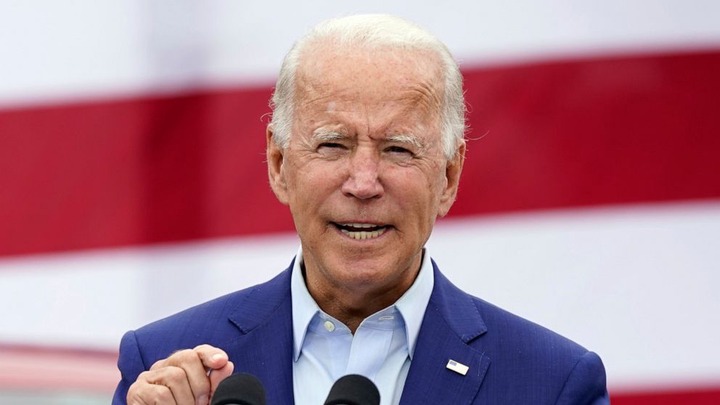
This incident unfolded against a backdrop of heightened US-Russia tensions, with DeSantis questioning the administration’s response. Despite US naval assets monitoring the Russian ships, DeSantis argued that adversaries respond to strength, not weakness or confusion.
The governor’s remarks reflect a broader debate over US foreign policy, contrasting his emphasis on strength and deterrence with the Biden administration’s diplomatic and multilateral approach. This clash of perspectives underscores the challenges in navigating complex geopolitical dynamics and projecting a strong and unified stance on the global stage.