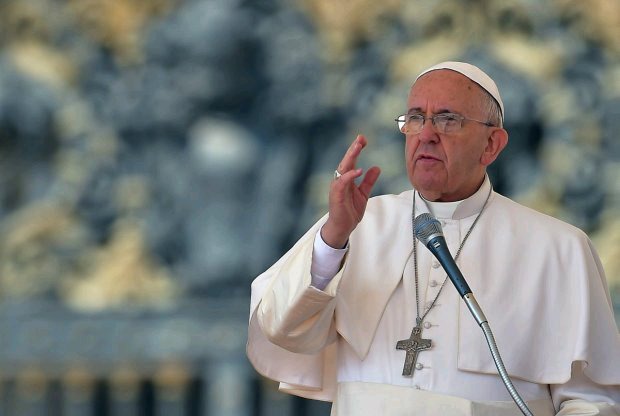
A tumultuous development within the Catholic Church, Pope Francis and Cardinal Victor Manuel “Tucho” Fernandez are embroiled in controversy following the revelation of a contentious pornographic work attributed to Fernandez.
Archbishop Carlo Maria Viganò, known for his steadfast defense of traditional Catholic values, has taken an unprecedented step by urging the Swiss Guards to apprehend the Pope and the Cardinal due to the explicit content authored by Fernandez. The scandal, initially reported by Margaret Flavin on January 14, 2024, has reverberated through the Vatican.
On Sunday, January 16, 2024, Archbishop Viganò utilized the platform formerly known as Twitter to express his deep concerns, denouncing Fernandez’s work as “blasphemous sewer regurgitations” and advocating for swift intervention.
Cardinal Fernandez, reportedly the author of the provocative piece titled “The Mystical Passion: Spirituality and Sensuality,” published in 1998, draws controversial parallels between mystical experiences and sexual responses.
In response to this revelation, Archbishop Viganò implores the Swiss Guards to uphold their oath in defending the See of Peter, urging the arrest of those he deems responsible for the perceived deviation from the Faith.
This latest scandal is not an isolated incident but rather part of Archbishop Viganò’s broader critique of the state of the Catholic Church. In his comprehensive “Declaration of Carlo Maria Viganò,” he asserts that a revolutionary process spanning over a century has led to the current challenges faced by the Church, accusing leaders from John XXIII to Benedict XVI of contributing to these issues.
Citing events such as the worship of Pachamama, the signing of the Abu Dhabi Declaration, and the consideration of deaconesses, Viganò points to a subversive agenda within the Church, originating with neomodernists during the Council and continuing into the post-conciliar period.
The Archbishop contends that the failure to address issues like the lavender mafia and the tolerance of subversive elements has eroded the integrity of the Vatican. Beyond this specific scandal, Viganò expresses concerns about the perceived infiltration of the Catholic Church by what he terms the “deep church,” drawing parallels with recent events in civil governments.
Advocating for a radical return to a traditional, values-driven approach, Archbishop Viganò emphasizes the necessity of collective action to counter what he perceives as an antichristic synarchy associated with the World Economic Forum.