


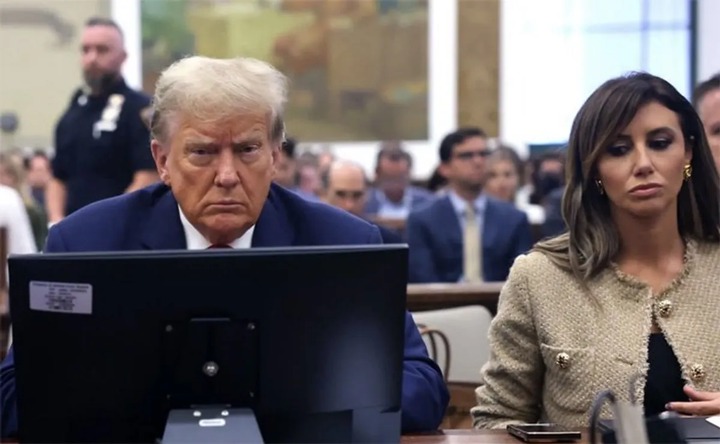
Former President Donald Trump’s legal team submitted a petition to the Supreme Court on Monday, challenging a Colorado decision that barred him from running for office in the state. The move follows a report by Raw Story on Thursday, January 4, 2024. The petition contends that the ruling violates Trump’s constitutional rights and misinterprets the 14th Amendment.
The Colorado ruling was based on the 14th Amendment, ratified after the Civil War, which prohibits individuals engaged in insurrection or aiding enemies of the United States from holding office. The state’s Secretary of State invoked this provision, referencing findings from the House select committee investigating the Jan. 6 Capitol riot, to disqualify Trump from the state’s ballot.
Trump’s legal representatives argue that the 14th Amendment doesn’t pertain to a president elected by the Electoral College, discrediting the Colorado ruling’s relevance. They assert that the events of Jan. 6 were not an insurrection, absolving Trump of involvement or incitement. They accuse the Secretary of State of biased action and denying Trump due process.
An unprecedented aspect of their argument is the claim that the 14th Amendment only restricts holding office, not running for office. They propose a scenario where Trump could run for president, win, and then be deemed ineligible upon inauguration day in 2025. They reason that this would not cause harm as the vice president would assume the presidency.
Former U.S. Attorney Barbara McQuade expressed disbelief and derision regarding this argument during an appearance on MSNBC. She labeled it as absurd and illogical, emphasizing that it appeared to focus solely on the literal wording of the Constitution without considering its intent or context, particularly concerning the 14th Amendment.
McQuade also cast doubt on the Supreme Court’s inclination to entertain or adjudicate the case based on its merits. She suggested that the Court might dismiss it as non-justiciable, implying that it’s beyond the courts’ purview and is a matter for Congress to decide.
Highlighting the significance and urgency of the issue, McQuade underscored its potential impact on upcoming primaries and the presidential election.


