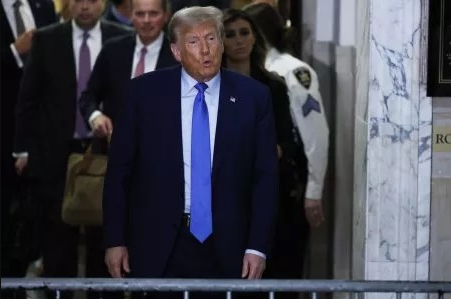
In a pivotal move with profound implications for the upcoming 2024 presidential election, the U.S. Supreme Court declared on Friday that it would scrutinize the eligibility of former President Donald Trump to participate in Colorado’s primary ballot. The decision, made public on January 6, 2024, not only sets the stage for a historic legal showdown but also opens the door for a nationwide precedent on addressing similar eligibility challenges.
Former President Trump’s fate hangs in the balance as the Supreme Court’s decision comes in response to his recent appeal. Filed just two days before the Court’s announcement, Trump implored the highest court in the land to overturn the ruling by the Colorado Supreme Court, which had ousted him from the 2024 presidential primary ballot. The Colorado court cited a constitutional provision barring individuals involved in “insurrection” from holding federal office as the grounds for their decision.
The case, slated for an expedited hearing on February 8, promises a swift resolution. The Supreme Court’s ruling could not only impact Trump’s eligibility but also establish national guidelines, influencing how states, including Colorado, handle similar challenges in future elections.
Legal battles have not been confined to Colorado; other states have contested Trump’s eligibility, echoing concerns about his alleged role in inciting the Capitol Hill insurrection on January 6, 2021. These challenges, viewed by some as attempts to obstruct the formalization of Joe Biden’s victory in the 2020 presidential election, have raised the stakes significantly.
The recent ruling by the Colorado Supreme Court marked a historic moment, being the first instance where a U.S. state court excluded Trump from a presidential election, citing the rarely invoked insurrection clause. Adding to the controversy, last week, Maine’s Secretary of State, Shenna Bellows, a Democrat, adopted a similar position, preventing Trump from appearing on the primary ballot. Maine now joins the growing list of states questioning the former president’s eligibility.
Both Colorado and Maine are crucial players in the upcoming primaries, scheduled for Super Tuesday on March 5, adding urgency to the resolution of Trump’s eligibility. As the U.S. Supreme Court delves into this high-stakes case, the entire nation awaits a decision that could redefine political eligibility parameters and guide states in addressing similar challenges in the future.
The outcome of the February 8 hearing and the subsequent ruling hold the potential to reshape the electoral landscape not only for the 2024 presidential race but for elections beyond. The nation is poised on the edge of its seat, anticipating a decision that could leave an indelible mark on the contours of American democracy.