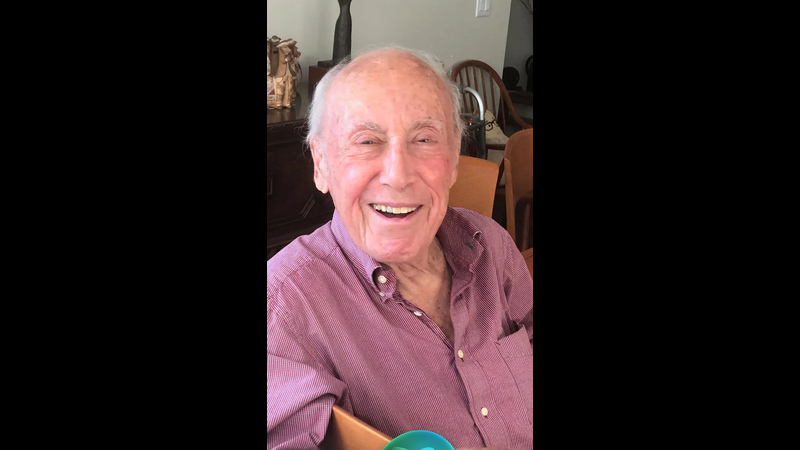
Joseph Boskin didn’t mean to become the face of April Fools’ Day — but one clever fib, spun off the cuff to amuse a reporter, catapulted him into prankster fame and created an unexpected legacy that outlived even his own scholarly accomplishments.
Boskin, a Boston University professor and historian with a passion for humor, passed away in February at age 95. While his career spanned serious academic work on race, politics, and civil rights, he’s best remembered for a spontaneous hoax that became a global sensation — a moment he once called his “Andy Warhol moment.”
It all started in 1983, when a university PR official asked if he knew anything about the origins of April Fools’ Day. Half-jokingly, Boskin claimed he’d studied it for years. That joke was lost in translation — the university issued a press release touting him as an expert, and the Associated Press came calling for an interview.
By the time the request reached him, Boskin was traveling to interview television icon Norman Lear. When he finally connected with the AP reporter, Fred Bayles, he tried to set the record straight: “I was just jiving.” But the reporter, eager for a scoop, wouldn’t let it go. So Boskin did what any good humor scholar might do — he played along.
On the spot, he invented a story: Back in ancient Rome, he claimed, Emperor Constantine had handed power over to a jester named Kugel for a day, who then declared April 1 a celebration of absurdity and jesting.
Bayles didn’t question it. He even asked how to spell “Kugel.”
The story ran in newspapers around the world. Boskin was quoted saying jesters were once considered wise men, truth-tellers cloaked in comedy. For two weeks, the legend of Emperor Kugel spread like wildfire — until Boskin came clean to his class. A student journalist caught wind and called the AP.
That’s when things got awkward.
“I thought my career was over,” Bayles later admitted. The AP released a statement saying they regretted the story had become “humorless.” But Boskin, true to form, stood by his prank: “I made up the story because it fit the spirit of April Fools’ Day.”
Born in Brooklyn in 1929, Boskin lived a colorful life even before the infamous hoax. After graduating from SUNY Oswego, he served in the Army as a historian during a Cold War mission in Greenland — keeping his feet firmly on the ground, thanks to a fear of helicopters. His academic path took him through NYU and the University of Minnesota, eventually landing him at Boston University in 1969, where he would become a pioneer in the study of humor.
He published scholarly articles like “Humor in the Civil Rights Movement” and “Black Humor: The Renaissance of Laughter,” blending comedy with social commentary.
But the Kugel story refused to fade. Every April, reporters revisited it. Boskin played along. Bayles, feeling betrayed, didn’t.
In a twist worthy of a sitcom, Bayles ended up teaching journalism at Boston University years later. The two eventually agreed to meet for lunch. Bayles brought a coconut cream pie, planning poetic payback — but backed off when he saw Boskin’s emotional reaction. “His eyes really darkened,” Bayles recalled. “I realized this had been torturing him, too.”
The pie remained uneaten — except by Bayles, who took it back to his office.
The prank even echoed into the next generation. Bayles’s daughter Cara, now a journalist herself, reached out to Boskin in 2017 to hear his side. He replied warmly, still amused that his most famous legacy was built on a complete fabrication. “There are sudden surprises in life,” he wrote, “and this is one I never could have imagined.”