Russian incendiary devices, capable of igniting in airplane baggage holds and airport warehouses, are reportedly “undetectable” by current airport scanners, a leading aviation security expert has warned. This revelation raises significant concerns over global aviation safety.
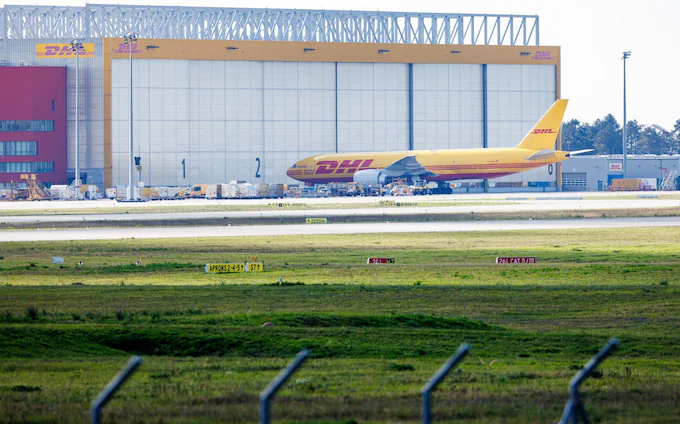
Jim Termini, a consultant for the International Civil Aviation Organization (ICAO), highlighted this alarming issue after an incendiary device ignited in a DHL warehouse in Leipzig, Germany, earlier this year. The package, which contained consumer electronics and a liquid container, was bound for the UK when the incident occurred in July.
Devices Hidden Among Common Cargo Items
Speaking on The Telegraph’s Ukraine: The Latest podcast, Termini explained the challenges faced by airport security: “We cannot detect them. They are undetectable because of the amount of everyday items that are in there and the things you are allowed to put in cargo.”
These incendiary devices, designed to ignite rather than explode, are extremely difficult to detect due to the common nature of the items they can be disguised within. Airport rules allow up to 100ml of liquids to pass through security. However, Termini noted that substances like hydrogen peroxide, which is commonly used in products such as hair dye, can be misused and remain impossible to completely regulate.
A New Threat Amid Evolving Security Measures
The concerns stem from the fact that, after nearly two decades of heightened liquid regulations following the 2006 liquid bomb plot, airport security has only recently relaxed the 100ml liquid rule. But as Termini pointed out, “It’s taken us 18 years from the liquid bomb plot in 2006 to get where we are…and then these incendiary devices came out the woodwork.”
Incendiary devices, which are more easily concealed compared to improvised explosive devices (IEDs) used by terrorists in the past, represent a realistic, cost-effective, and dangerous method of attack. Termini emphasized the vulnerability of the global supply chain, noting that it remains a valid target for hostile actors, such as Russia.
Urgent Call for Heightened Aviation Security
While individual states have been left to manage this emerging threat, more collective action is needed. Termini criticized the lack of an adequate response from international aviation authorities, stating, “The EU has a collective aviation security regime, and they’ve taken no additional measures.” In contrast, the US has already issued an emergency amendment requiring additional checks for cargo coming from Europe or Commonwealth of Independent States (CIS) nations.
In the UK, authorities are reportedly reviewing whether further security measures are necessary. DHL has also responded by tightening restrictions on shipments, with their UK website stating they no longer accept any liquids for posting, regardless of the size of the container.