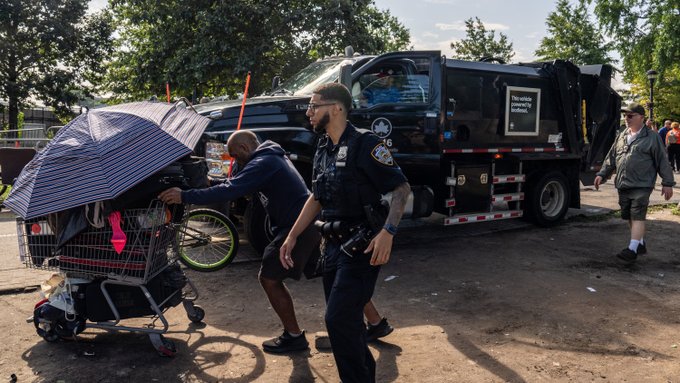
New York City officials have recently taken action to dismantle an encampment on Randall’s Island, where homeless migrants had sought refuge. This decision comes as the city faces a growing crisis of individuals sleeping outside.
The eviction from Randall’s Island is part of a broader effort to address the rising number of people without stable housing in New York City. As temperatures drop and the city grapples with increased homelessness, officials are under pressure to find sustainable solutions.
Randall’s Island, located in the East River between Manhattan, Queens, and the Bronx, had become a temporary shelter for many who were displaced or without permanent homes. The encampment there was notable for its size and the visible struggles of its inhabitants.
The decision to clear the area follows a series of similar actions across the city. Authorities argue that these measures are necessary to ensure public safety and to manage the strain on city resources. However, critics of the policy contend that the removal of these encampments merely displaces the problem rather than addressing the underlying issues of homelessness and inadequate housing.
New York City has been navigating a complex landscape of social and economic challenges, including an increasing number of individuals and families finding themselves without a home. The city’s efforts to manage these issues include both short-term measures like encampment cleanups and longer-term strategies aimed at increasing affordable housing and support services.
Advocates for the homeless emphasize the need for comprehensive solutions that address the root causes of homelessness. They argue that without adequate support systems and housing options, actions like these only serve to push the problem out of sight without solving it.
As New York City continues to deal with the ramifications of this situation, the focus remains on balancing immediate needs with long-term strategies to provide stability and support for its most vulnerable residents.