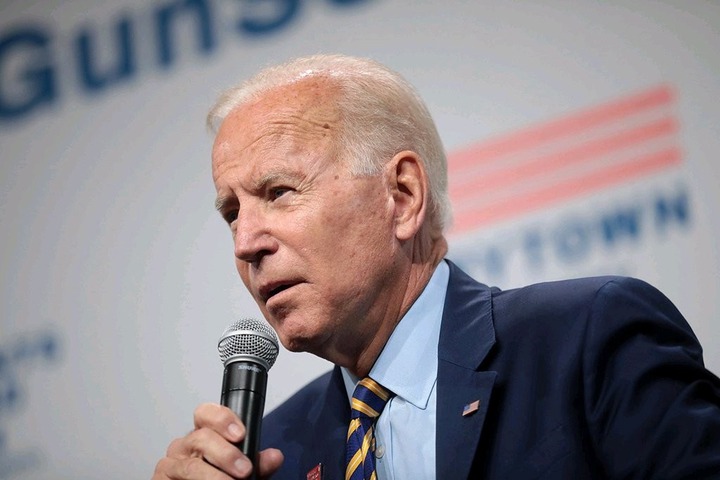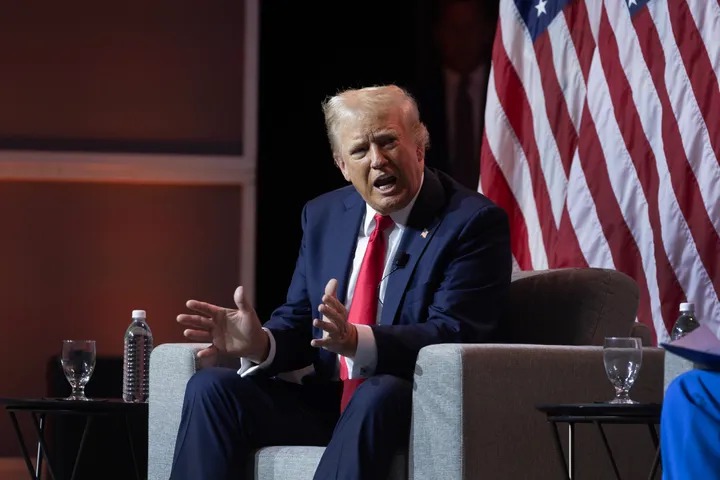
Clash of political rhetoric, Sen. Raphael Warnock (D-Ga.) has sharply criticized former President Donald Trump for questioning Vice President Kamala Harris’ racial identity. Trump’s remarks, made during a speech at the National Association of Black Journalists (NABJ) convention in Chicago, have sparked controversy and debate over racial and ethnic identity.
During the NABJ event, Trump alleged that Harris, who is both Black and South Asian, had previously only identified as Indian and questioned whether she had recently “turned Black.” Trump’s comments, which were widely criticized as false and divisive, implied that Harris could not simultaneously be both Black and South Asian. He suggested that someone should investigate her racial identity, further igniting tensions and discussions.
Sen. Warnock, a Black leader himself, responded vehemently to Trump’s comments. In an interview on CNN’s “Laura Coates Live,” Warnock denounced Trump’s statements as a promotion of “division and hatred.” He highlighted the “sad irony” of Trump’s remarks, pointing out that Harris’s identity reflects the diverse and complex nature of the American experience.
“He doesn’t even recognize the sad irony of his remark,” Warnock said. “In a real sense, Kamala Harris’ story is an iteration of the American story. The diversity that is among us and often within us.” Warnock further emphasized that Trump’s ignorance about Harris’s identity shows a lack of understanding about the American people he seeks to represent.
Trump’s comments also drew criticism from various quarters, including from Harris herself. At a conference in Houston hosted by the historically Black sorority Sigma Gamma Rho, Harris responded to Trump’s remarks, calling them part of “the same old show, the divisiveness and the disrespect.” She stressed the importance of leaders who unite rather than divide, advocating for a leadership style that embraces diversity and fosters understanding.
Harris’s background includes a rich tapestry of cultural and racial identities. Born in California to Jamaican and Indian immigrants, she has always identified as a Black woman, despite her South Asian heritage. Her educational and professional achievements, including attending a historically Black university and being a member of a historically Black sorority, underscore her commitment to and identification with the Black community.
Trump’s questioning of Harris’s racial identity has been criticized as an attempt to undermine her legitimacy and foster division. The broader debate touches on important issues of race, ethnicity, and identity, reflecting ongoing national conversations about what it means to be both Black and South Asian in America.
As the political landscape continues to evolve, these discussions highlight the need for informed and respectful dialogue about identity and representation. The exchange between Trump and Warnock underscores the broader implications of how racial and ethnic identities are perceived and valued in American society.