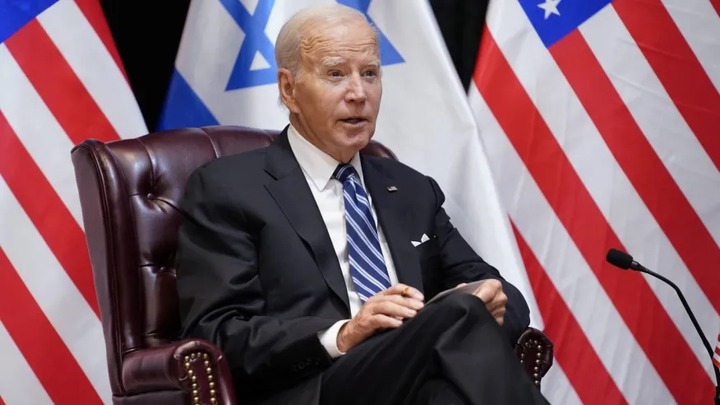
In the aftermath of a surprise attack by Hamas on Israel on October 7, President Joe Biden’s stance on the conflict is experiencing a noteworthy shift in support, particularly among young voters, which could significantly influence his chances in the upcoming presidential election.
**Conflict Overview:**
Hamas initiated an unexpected attack resulting in approximately 1,200 casualties and the seizure of around 240 hostages on October 7, as reported by the Associated Press on December 21, 2023. In response, Israel conducted extensive airstrikes and a ground offensive in Gaza, causing a significant loss of life, with nearly 20,000 Palestinians reportedly killed, according to Hamas-run Palestinian health officials. Israeli military sources reported 118 soldiers killed during the ground invasion.
**U.S.-Israel Relations:**
Traditionally a steadfast ally of Israel, the U.S., under President Biden, recently identified as a Zionist. Following the attacks, Biden reaffirmed Washington’s support for Israel’s right to self-defense, proposing a substantial $14 billion aid package and the provision of weapons. Despite initial resistance to calls for a ceasefire, Biden’s language has since softened.
**Public Opinion Shift:**
A recent New York Times/Siena College poll conducted from December 10 to December 14, 2023, indicates a decline in support for Biden’s handling of the conflict among young voters aged 18 to 29. Nearly 75 percent of this demographic disapproves of the Democrat’s approach, with the same proportion believing Israel should do more to prevent civilian casualties in Gaza.
**Trump’s Growing Appeal:**
Interestingly, the survey suggests that Biden’s Republican rival, Donald Trump, is gaining support among young voters who backed Biden in 2020. Trump holds a 49 percent to 43 percent advantage over Biden among young voters and a 46 percent to 44 percent lead among registered voters overall.
**White House Interns’ Pleas:**
Over 40 White House interns urged Biden to support a ceasefire, accusing him of disregarding the pleas of the American people. This sentiment poses a potential challenge for Biden as he faces criticism for not aligning with the views of a significant portion of his base.
**Divergent Perspectives:**
Political analysts offer divergent perspectives on the potential impact of Biden’s handling of the Israel-Hamas conflict on the 2024 election. Thomas Gift, an associate professor of political science at University College London, suggests that Biden is in a challenging situation, facing criticism from both pro-Israel and pro-Palestinian groups.
**Varying Poll Results:**
While the New York Times/Siena College poll suggests a six-point lead for Biden among those who voted in the 2020 election, Trump holds a 22-point lead among those who did not vote in 2020. However, this latter demographic is less likely to vote in 2024.
A recent Newsweek poll by Redfield and Wilton Strategies indicates a slight increase in support for Biden’s response to the war among individuals aged 18 to 42 since October. Forty-two percent of Gen Z voters (aged 18-26) and 48 percent of millennials (aged 27-42) agree with Biden’s approach. Nevertheless, 24 percent of Gen Z voters and 25 percent of millennials disapprove.
**Conclusion:**
The shifting sentiment among young voters, who are increasingly wary of what they perceive as unwavering support for Israel, could have electoral consequences if they continue to dissent from Biden’s approach. The evolving dynamics of this situation will undoubtedly be a crucial factor in the lead-up to the 2024 presidential election.