


November 22, 1963, a tragic event unfolded that would forever alter the course of American history. President John F. Kennedy (JFK) arrived in Dallas, Texas, with high hopes for a successful trip to strengthen his political support in the South. However, in a shocking turn of events, JFK’s visit would end in violence, changing the nation’s trajectory forever.
JFK’s Arrival in Dallas
The day began like any other for the Kennedys, but it would soon take a dramatic turn. JFK and his wife, Jacqueline, arrived at Dallas Love Field Airport at around 11:30 AM. The couple was greeted by enthusiastic crowds who lined the streets, excited to see the president. Their welcoming energy seemed to signal a promising day ahead for the president’s trip. However, little did they know that the event would soon take a deadly turn.
The Assassination in Dealey Plaza
As the presidential motorcade traveled through Dealey Plaza at 12:30 PM, shots rang out. JFK was struck by bullets, one in the neck and another in the head. As the car sped to Parkland Memorial Hospital, the nation was gripped with horror. Despite the desperate efforts of doctors, President Kennedy was declared dead at 1:00 PM. Vice President Lyndon B. Johnson, who was traveling in a separate vehicle, was immediately rushed to safety, but the nation was plunged into grief.
The assassination of President Kennedy was a devastating shock that echoed across the globe. The world had lost one of its most dynamic and charismatic leaders in a mere moment, and questions about the shooter and the motives behind the assassination would remain unanswered for years to come.
LBJ Sworn In as President
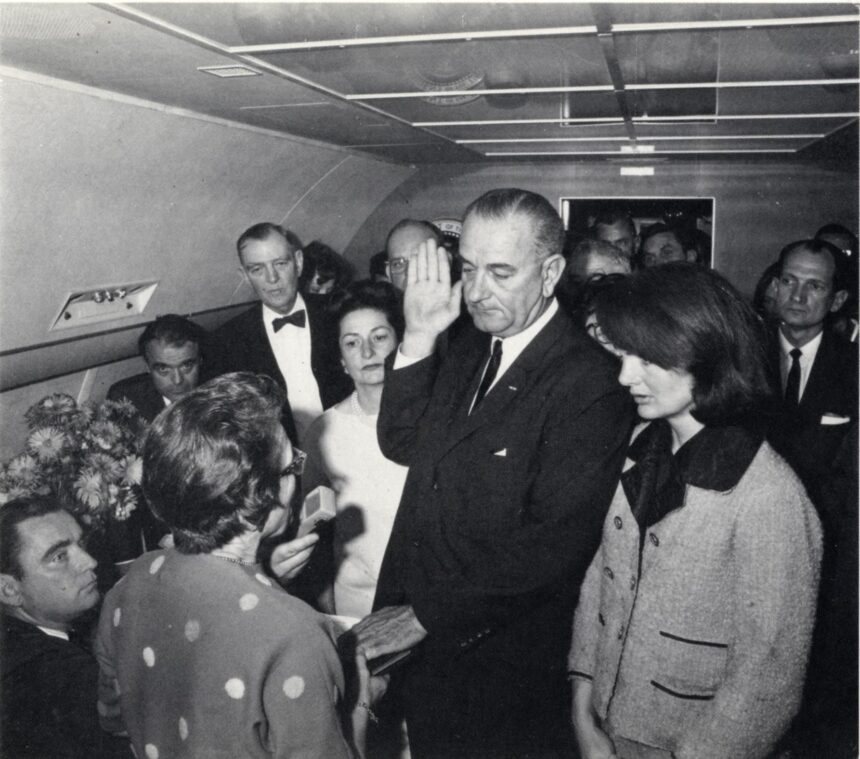
Amid the confusion and tragedy, the nation’s government swiftly responded to ensure a peaceful transition of power. As the nation mourned, Vice President Lyndon B. Johnson was sworn in as the 36th President of the United States aboard Air Force One, which was still on the tarmac at Dallas Love Field Airport. The swearing-in took place at 2:39 PM, with Lady Bird Johnson by his side and a small group of witnesses, including government officials and Kennedy’s aides. The moment was historic and marked the beginning of Johnson’s presidency during one of the most tumultuous periods in U.S. history.
The swearing-in ceremony was a somber occasion, but it was necessary for the stability of the nation. Johnson, who had been serving as Vice President under JFK, would go on to lead the country through challenging times, including the civil rights movement and the escalation of the Vietnam War.
JFK’s Remains Return to the White House
On the morning of November 23, 1963, President Kennedy’s remains were transported back to Washington, D.C. aboard a military aircraft. The plane landed at Andrews Air Force Base, where the somber procession continued. JFK’s casket was carried by a military honor guard to the White House, where his body was placed in the East Room for a period of public mourning. The White House became a focal point for a nation in mourning, as Americans paid their respects to the fallen leader.
In the days that followed, the country was in a state of shock and disbelief. The assassination marked the end of the era of Camelot, as it was called, a period characterized by optimism and progress under JFK’s leadership. The loss of JFK left a deep scar on the American consciousness, and the investigation into his assassination, led by the Warren Commission, would raise many questions and spark ongoing debate about what truly happened in Dealey Plaza
The events of November 22-23, 1963, remain etched in the history of the United States. JFK’s tragic assassination in Dallas, the immediate swearing-in of LBJ, and the arrival of JFK’s remains at the White House the following day were moments that would define a nation’s sense of loss and its ability to come together during times of crisis. The legacy of John F. Kennedy, his leadership, and the enduring questions surrounding his death continue to captivate the American public to this day.


