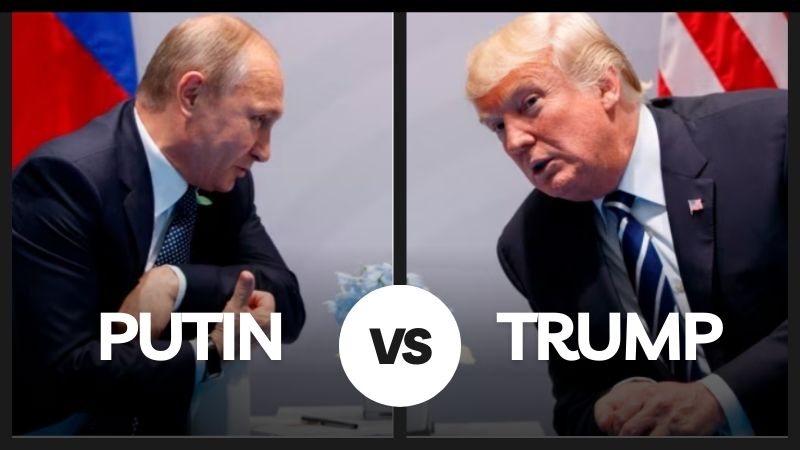
Donald Trump is back in the headlines, and this time it’s about his fiery threat to impose tariffs on Russia. But is this a calculated move or just another chaotic decision? Let’s dive into the bizarre details and what it could mean for global trade and diplomacy.
The situation gets stranger by the minute. Many are questioning who’s truly pulling the strings in Trump’s circle of influence. Increasingly, it seems that Stephen Miller is the one shaping policies from the shadows. Some have even compared Miller to Martin Bormann, a key figure in Nazi Germany known for consolidating power by manipulating his leader’s vulnerabilities. Miller’s fingerprints appear to be on many of the controversial moves from targeting transgender rights to cracking down on migrants and dismantling diversity initiatives. Meanwhile, Trump seems more focused on signing off on whatever lands on his desk.
Amid this backdrop, Trump’s attention has turned to Russia and Ukraine. He once boasted that resolving the Ukraine conflict would take just a phone call. That phone call, of course, never materialized. Now, in the absence of any real plan, Trump has unveiled the idea of tariffs against Russia—a move that has left economists scratching their heads.
Here’s the reality: Russia does export a range of goods to the United States, including refined petroleum, fertilizers, platinum, and iron. However, none of these commodities are irreplaceable for the U.S., and Russia’s economy isn’t going to crumble if this trade is disrupted. It’s a risky move, but not necessarily a game-changer.
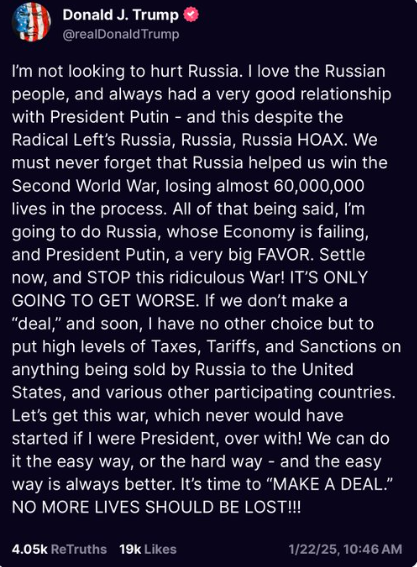
Even the figures Trump has cited to justify his actions are questionable. For instance, his claim that Russia lost 60 million people in World War II is wildly inaccurate. The global death toll of WWII ranges between 48 and 85 million, with Russia’s losses far below the number Trump cited.
Economists like Robert Reich and Paul Krugman are expected to weigh in soon, but early reactions suggest this strategy lacks substance. The Kremlin isn’t likely to feel threatened, and Russia’s economy—while not invincible—isn’t particularly dependent on trade with the United States. To make matters worse, Trump’s credibility on the international stage is shaky. He has twice claimed to have spoken with the Kremlin, only for Moscow to deny these conversations ever took place.

In the end, this tariff threat feels more like political theater than a strategic maneuver. Whether it’s about distracting from domestic issues or testing a new angle in U.S.-Russia relations, the move raises more questions than it answers. The world is left wondering what’s next—and whether anyone truly knows what’s happening behind the scenes