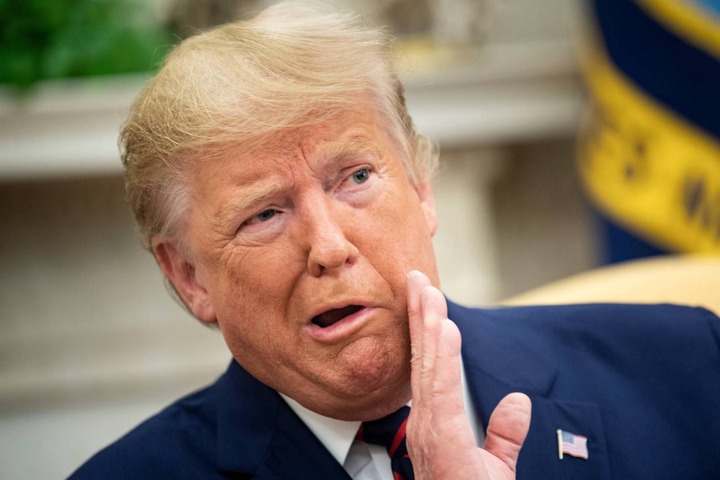
Bold move that’s already sparking legal and political backlash, Donald Trump has signed an executive order targeting a key pillar of one of the most important civil rights laws in American history — the Civil Rights Act of 1964. The new directive seeks to dismantle federal regulations enforcing the “disparate impact” standard under Title VI, a move critics say would gut crucial protections against systemic racial discrimination.
For decades, the disparate impact framework has served as a tool to expose policies that, while seemingly neutral on the surface, have disproportionately harmful effects on marginalized communities. Simply put, if a rule or practice negatively affects one group far more than another — without a solid justification — it can be ruled discriminatory under the law. This principle helped dismantle barriers in employment, housing, and education, especially where explicit racism was replaced by more subtle but equally damaging policies.
The roots of this standard go back to Griggs v. Duke Power Co., a 1971 Supreme Court case where a company had introduced hiring criteria like high school diplomas that weren’t actually necessary for job performance — and which disproportionately excluded Black applicants. The Court, led by conservative Chief Justice Warren Burger and encouraged by President Nixon’s Justice Department, unanimously ruled against the company. That ruling laid the groundwork for decades of civil rights progress.
Trump’s order, titled “Restoring Equality of Opportunity and Meritocracy,” aims to roll back these protections by eliminating disparate impact regulations and instructing agencies to reconsider — or abandon — related enforcement efforts. The order frames such protections as unfair advantages rather than as safeguards against deeply embedded discrimination. But this interpretation runs counter to established law and decades of bipartisan legal precedent.
Justice Anthony Kennedy, in a 2015 Supreme Court decision (Texas Dept. of Housing & Community Affairs v. Inclusive Communities Project), reaffirmed that disparate impact claims are valid under the Fair Housing Act. He made it clear that such rulings don’t take anything away from anyone — instead, they correct unjust policies like zoning rules that block affordable housing, which disproportionately harms Black families.
Legal experts say Trump’s move leans heavily on dissents — not majority rulings — to justify rewriting policy. In fact, no majority opinion from the Supreme Court has ever rejected the constitutionality of disparate impact standards. Even Justice Antonin Scalia, in a 2009 concurrence, only speculated about a potential conflict — he didn’t declare one.
This latest executive order fits into a broader pattern by the Trump administration of reshaping federal power by reviving long-dismissed legal arguments and pushing past established norms. In past moves, Trump removed officials from independent civil rights agencies based on similarly shaky legal ground — relying on a dissenting opinion from a 1988 case that was otherwise decided 8–1.
Legal analysts expect the courts to intervene, pointing out that the power to define the scope of civil rights law lies with Congress, not the president. The disparate impact standard, far from being an overreach, has long served as a critical backstop to ensure fairness where direct evidence of discrimination is hard to prove — but its effects are painfully clear.