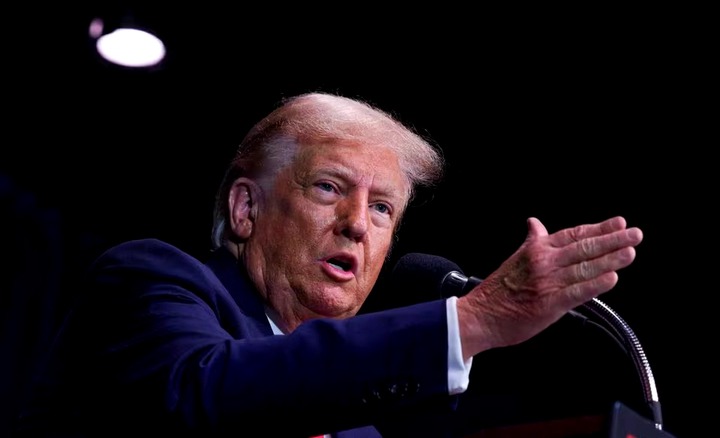
President Donald Trump is pushing forward with one of his most ambitious defense promises yet: the “Golden Dome” missile shield — a colossal $25 billion project that’s set to kick off a sweeping overhaul of America’s aerial defenses. Touted by Trump as the nation’s answer to Israel’s Iron Dome, this system aims to guard the U.S. against modern threats like ballistic, hypersonic, and cruise missiles. But as the plan begins to take shape, it’s already raising eyebrows in Washington — and not just over its sky-high cost.
The Golden Dome is part of a broader Republican effort to funnel $150 billion more into Pentagon coffers through a reconciliation bill. The $25 billion earmarked for this missile defense shield marks a down payment on what could ultimately become a trillion-dollar program. The vision? A sophisticated web of ground and space-based interceptors, sensors, and satellites that could spot and eliminate enemy missiles before they strike U.S. soil.
Billions Budgeted, But It’s Just the Beginning
The initial investment breaks down into several pricey components: $7.2 billion for developing and purchasing satellite sensors, $5.6 billion for space-based interceptors, and another $2.4 billion for electronic warfare capabilities. Additional funds are set aside for hypersonic defense systems, radar upgrades, and faster development of next-gen ICBM defenses.
But experts warn the total cost will likely balloon far beyond the proposed $25 billion. Covering the entire continental U.S. would require anywhere from 400 to more than 1,000 satellites, along with up to 200 armed attack satellites, according to Reuters. That kind of coverage doesn’t come cheap — or quickly.
Elon Musk’s Involvement Sparks Controversy
One of the most talked-about aspects of the Golden Dome rollout is the potential windfall it could bring for SpaceX — and by extension, Elon Musk. As CEO of the company, a key Trump ally, and now a special adviser in the White House, Musk stands to benefit from billions in government contracts. He also poured over $270 million into Trump’s 2024 campaign.
Reports that SpaceX may land a major role in building out the shield have prompted outrage on Capitol Hill. A group of Democratic lawmakers sent a letter to the Pentagon’s inspector general demanding an investigation into what they call a potential conflict of interest. Meanwhile, Sen. Jeanne Shaheen has introduced legislation that would block any contracts from going to companies owned by special government employees, like Musk.
Tech Experts Question Whether It’s Even Possible
When Trump announced his Golden Dome plan in March, he invoked Ronald Reagan’s “Star Wars” program from the 1980s — a missile defense vision that never moved past the drawing board. Trump insists the technology is finally ready, but defense analysts aren’t so sure.
Even with today’s advances, developing space-based interceptors and high-powered directed energy weapons could take years, if not decades. Critics say it would be more realistic — and cost-effective — to upgrade the existing missile defense systems already in place in Alaska, California, and elsewhere across the country.
Concerns Mount Over Effectiveness and Vulnerability
Some lawmakers are voicing deeper concerns — not just about the cost or ethics, but whether the Golden Dome could even work in a real conflict. Rep. Seth Moulton warned that the system could be overwhelmed if an enemy launched a swarm of missiles at once.
He also pressed military officials on whether the plan accounts for threats like sea-launched attacks — missiles fired from submarines or vessels near U.S. shores — which the current blueprint appears to overlook. In a recent House hearing, top Pentagon officials acknowledged those risks haven’t yet been fully addressed.
Inspired by Israel, but a Different Battlefield
Trump has repeatedly compared the Golden Dome to Israel’s Iron Dome, a proven defense system that intercepts short-range rockets. But experts caution that the comparison doesn’t hold up. Iron Dome is designed for a much smaller area and shorter distances — roughly 43 miles — while the threats facing the U.S. involve long-range missiles launched from across the globe.
Adapting a system built for a country the size of New Jersey to one as vast as the United States would be extremely expensive and technically challenging. That hasn’t stopped Trump from promising a U.S.-made version that’s “the greatest dome ever,” but critics argue the nation needs a grounded, scalable solution — not just a flashy campaign promise turned billion-dollar gamble.
Would you like a graphic or visual explainer to go with this article?