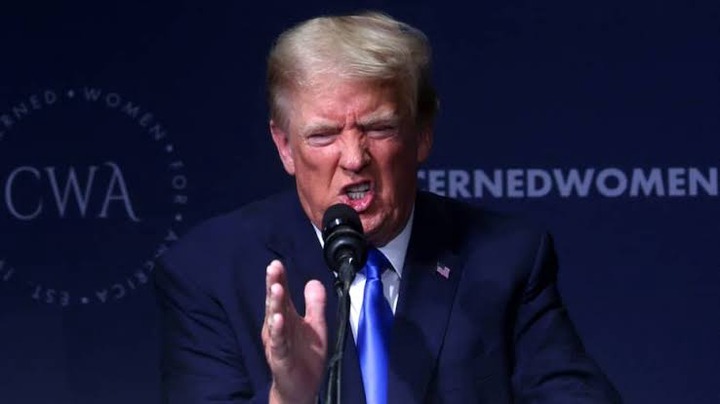
The recent ruling by a federal appeals court rejecting Donald Trump’s claim of immunity from criminal prosecution indeed represents a significant setback for the former president. Trump’s assertion of immunity based on his actions during his presidency was firmly rebuffed by the three-judge panel at the US Court of Appeals for the DC Circuit. The panel’s unanimous opinion emphasized the dangers of unchecked executive power and reaffirmed the principle that no individual, not even a former president, should be beyond the reach of the law.
This ruling underscores the importance of accountability and the rule of law in a democratic society. By rejecting Trump’s immunity claim, the court has affirmed that all individuals must face legal scrutiny for their actions, regardless of their position or past office.
However, the legal battle is far from over. While the decision returns the case to the trial court, it also opens the door for further appeals by Trump. His legal team may pursue appeals to the full appeals court and, ultimately, to the US Supreme Court in an effort to challenge the ruling. Trump’s strategy of seeking delays aligns with his political objectives, particularly as he considers a potential run for the presidency in 2024. Prolonging the legal process could allow him to shape the outcome of any future trial and potentially evade accountability.
Yet, despite Trump’s efforts to evade accountability, the rejection of his immunity claim demonstrates the resilience of the judicial system and its commitment to upholding the rule of law. The outcome of Trump’s case will have far-reaching implications for the future of executive power and accountability in the United States, serving as a test of the nation’s commitment to the principles of justice and democratic governance.