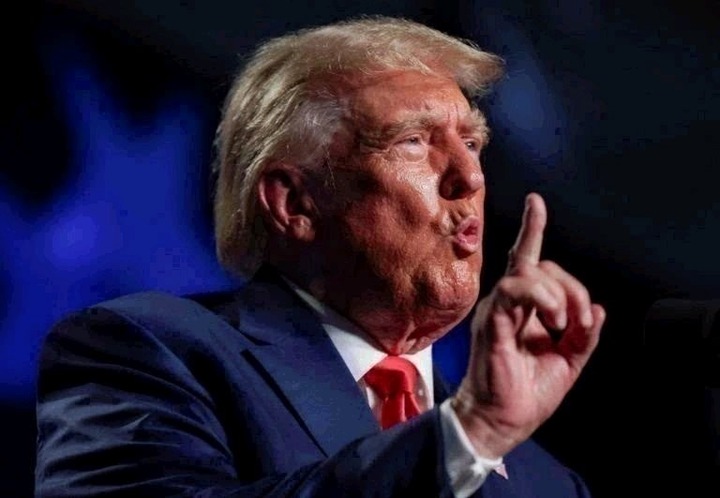
Former President Donald Trump has made headlines by promising to use the Alien Enemies Act of 1798 to expedite deportations of undocumented migrants if he is re-elected. This law, which has not seen much use over the years, could play a significant role in his campaign’s anti-immigration agenda.
What is the Alien Enemies Act?
The Alien Enemies Act allows the U.S. president to detain, relocate, or deport non-citizens from countries deemed enemies during wartime. The act states:
“Whenever there shall be a declared war between the United States and any foreign nation or government … all natives, citizens, denizens, or subjects of the hostile nation … who shall be within the United States, and not actually naturalized, shall be liable to be apprehended, restrained, secured and removed, as alien enemies.”
This legislation was passed in 1798 amid fears of conflict with France. Although it was one of several laws known as the Alien and Sedition Acts, it remains on the books without an expiration date, unlike the others, which have since been repealed.
Trump’s Promises and Rhetoric
Trump’s campaign rallies have been filled with references to the Alien Enemies Act. He has pledged to initiate a federal operation named Operation Aurora, targeting undocumented migrant gangs in the U.S. He claims that cities like Aurora, Colorado, have been overtaken by these gangs. His rhetoric has framed the situation as an invasion, insisting that using the act would enable the government to remove criminal networks swiftly.
Additionally, the Republican Party’s 2024 platform echoes Trump’s sentiments, stating that the law would be used to remove gang members and drug dealers to combat illegal gang violence.

Historical Context
The Alien Enemies Act has a controversial history. It has only been invoked during significant military conflicts, such as the War of 1812, World War I, and World War II. In each case, the law was used to detain nationals from enemy countries, including thousands of Germans during World War I and Japanese, German, and Italian nationals during World War II. However, since World War II, it has remained largely dormant, and the nature of warfare has evolved significantly.
Challenges Ahead for Trump
Legal experts suggest that invoking the Alien Enemies Act may not be as straightforward as Trump claims. The act permits action only after Congress has declared war. Given that the U.S. has not formally declared war since World War II, using this act could face significant legal challenges.
Georgetown University Law Center professor Steve Vladeck highlights the difficulty in framing illegal immigration as an invasion and migrant gangs as foreign nations, a necessary step for justifying the act’s use. Additionally, even anti-immigration advocates recognize these challenges, suggesting that defining migrant gangs as threats under the Alien Enemies Act would be an uphill legal battle.
Existing Immigration Powers
It’s important to note that Trump doesn’t necessarily need the Alien Enemies Act to pursue his immigration agenda. Presidents already possess the authority to arrest and deport undocumented immigrants. The primary challenge has not been a lack of legal authority but rather a shortage of resources to enforce immigration laws effectively.
Legislation aimed at improving border security has faced significant political hurdles, which has hampered previous administrations’ efforts to manage immigration effectively.
Future Implications
Should Trump be re-elected and attempt to use the Alien Enemies Act, experts anticipate immediate legal challenges. The courts may not look favorably on utilizing this authority in a manner inconsistent with its historical context, especially without a formal declaration of war.
Moreover, there are calls from some lawmakers, such as Rep. Ilhan Omar and Sen. Mazie Hirono, to repeal the Alien Enemies Act altogether. Omar has argued that this outdated law should be removed from the books, especially in light of Trump’s recent rhetoric.