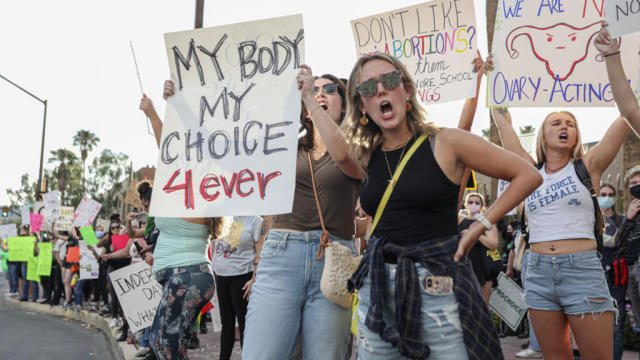
Significant move towards state autonomy, the Arizona Supreme Court recently made a decisive ruling regarding the 1864 abortion ban. This ruling, championed by Kari Lake, has sparked discussions nationwide, reaffirming the state’s authority to determine its stance on abortion laws.
https://twitter.com/realDonParody/status/1777811230163398987
The decision by the Arizona Supreme Court to uphold the 1864 abortion ban underscores the principle of states’ rights in governing their respective jurisdictions. By delegating the regulation of abortion to individual states, this ruling acknowledges the diverse perspectives and values across the nation.
It’s important to note that this decision aligns with the broader trend of empowering states to address contentious issues within their borders. By allowing states to enact and enforce laws reflective of their constituents’ beliefs, the Arizona Supreme Court’s ruling fosters a system of governance that respects local values and preferences.
Furthermore, Kari Lake’s support for this decision signifies a significant step forward for the Pro-Life movement. By advocating for policies that protect the sanctity of life, Lake and others like her are working towards creating a society that values and prioritizes the well-being of the unborn.
The decision in Arizona serves as a beacon of hope for Pro-Life advocates across the country. It demonstrates that progress towards protecting the rights of the unborn is not only possible but also within reach. As the momentum for Pro-Life initiatives continues to grow, it is imperative that we remain steadfast in our commitment to making Pro-Life great again.
In conclusion, the Arizona Supreme Court’s decision to uphold the 1864 abortion ban represents a victory for state sovereignty and the Pro-Life movement. By entrusting states with the authority to regulate abortion laws, this ruling promotes a more inclusive and responsive system of governance. As we celebrate this milestone, let us continue to work towards building a future where every life is valued and protected.