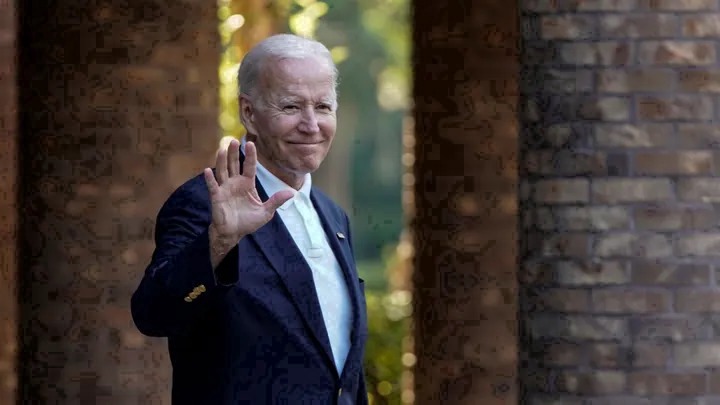
Controversy surrounding President Joe Biden’s interview with Special Counsel Robert Hur has reached a boiling point, sparking heated debates across social media platforms.
A recent post on X (formerly known as Twitter) has stirred significant attention, drawing focus to the ongoing dispute, as reported by Townhall.com on Sunday, June 2, 2024.
The Oversight Project, affiliated with the Heritage Foundation, shared a segment of a filing from Friday related to the release of the interview audio.
This initiative, alongside Judicial Watch, has been fervently advocating for the public release of the audio recording.
Bradley Weinsheimer, an Associate Deputy Attorney General at the Department of Justice (DOJ), contributed an affidavit central to the discussion. Weinsheimer’s affidavit addresses the existence of two transcripts encompassing Biden’s interview over two days.
He points out that insignificant filler words like “uh” and “um” and repeated words such as “and, and” were omitted from the transcripts, reassuring that these exclusions do not alter the substance of the conversation.
“There are no significant omissions of dialogue between the audio recording and the transcripts,” he clarified.
However, questions arise regarding the specific divergences between them. My colleague, Jim Thompson, delved into this topic on Saturday, underscoring how privacy concerns are being invoked to withhold the audio and the potential implications of AI manipulation.
The tweet from the Oversight Project set off a frenzy on X, rapidly gaining traction and garnering over a million views.
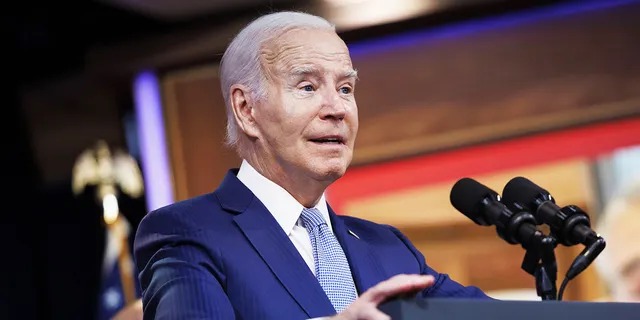
In response, Ian Sams, spokesperson for the White House Counsel, reiterated the fidelity of the transcripts to the audio recording.
Despite Sams’ assurances, his statement was met with considerable criticism, with many questioning the rationale behind withholding the audio if it indeed mirrors the transcripts.
Critics argue that if there are no substantive disparities, there should be no impediment to releasing the audio.
Moreover, they challenge the notion of privacy protection when the transcript has already been disclosed to the public.
They contend that the concern of potential AI manipulation is unsubstantiated, as AI could theoretically tamper with any content, regardless of its public availability.
Weinsheimer’s affidavit also acknowledges instances in the interview where certain words are “indiscernible.” He concedes that some segments lack clarity.
However, the audio recording could offer additional context to these ambiguous segments. For individuals familiar with Biden’s speech patterns, these segments may be more comprehensible than they appear in the transcript.
Furthermore, it is noted that certain redactions are made to eliminate “sensitive information, including classified material.”
The strenuous efforts to block the audio release suggest a reluctance to disclose certain aspects of the recording to the public.
This has only intensified speculation and calls for transparency regarding Biden’s interview with Special Counsel Robert Hur.