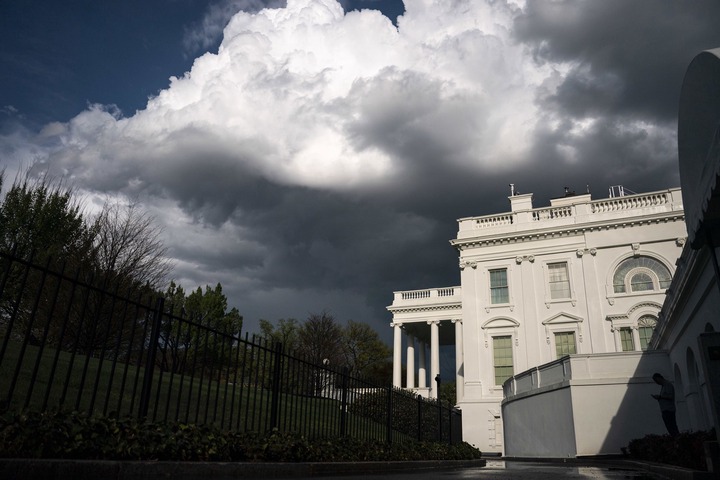
Serious digital slip-up that has raised alarms across Washington, internal government records reveal that career staffers under both the Biden and Trump administrations mistakenly shared sensitive documents — including potential White House floor plans — with more than 11,000 federal employees.
The exposed materials, which were stored in a Google Drive folder, included controlled unclassified information (CUI), banking details, and even design plans for a blast door at the White House Visitor Center. According to documents reviewed by The Washington Post, these files were accessible — and in many cases editable — by the entire General Services Administration (GSA) workforce, an agency responsible for supporting federal operations and managing government property.
This mishap wasn’t a one-time blunder. Records show the oversharing began as far back as early 2021 and continued into 2025. It involved at least 15 sensitive files, nine of which were officially marked as CUI — a classification reserved for information that, while not technically classified, still requires restricted handling.
The GSA’s internal controls eventually flagged the breach last week during a routine audit. Inspectors discovered the overly broad file-sharing settings and notified the agency’s IT incident response team, which then scrambled to secure the documents. Despite repeated efforts, IT staff were unable to reach the original file owners.
Among the documents shared were a safety survey of the White House East Wing — including “blueprints” of the area — and a similar report for the West Wing, which houses the Oval Office, Cabinet Room, and Situation Room. Although not confirmed to be classified, experts say such materials could contain enough sensitive details to pose a risk to national security.
“This kind of mistake shouldn’t happen — especially not at this scale,” said Michael Williams, a Syracuse University expert in international security. “You’re talking about documents that, even if not technically classified, should never be viewable by over 11,000 people.”
The incident also adds to a growing list of digital security concerns plaguing recent administrations. Just last month, Trump-era officials reportedly invited an outside journalist into a sensitive government chat, and personal Gmail accounts were used for official business — an insecure practice widely criticized by cybersecurity professionals.
A GSA official, speaking anonymously, emphasized that the agency does perform regular scans and conducts yearly training to avoid such errors. Still, this latest episode highlights the limitations of current safeguards in an increasingly digital federal landscape.
Security analysts say it’s unclear if the exposed White House documents contained restricted architectural features like hidden corridors or security installations. If they did, the material could qualify for classification under an executive order designed to protect national security assets — even if it wasn’t labeled as such.
The files reportedly remained accessible for years, and while the breach has since been contained, the investigation is still ongoing. The White House and GSA have not commented publicly on the matter.