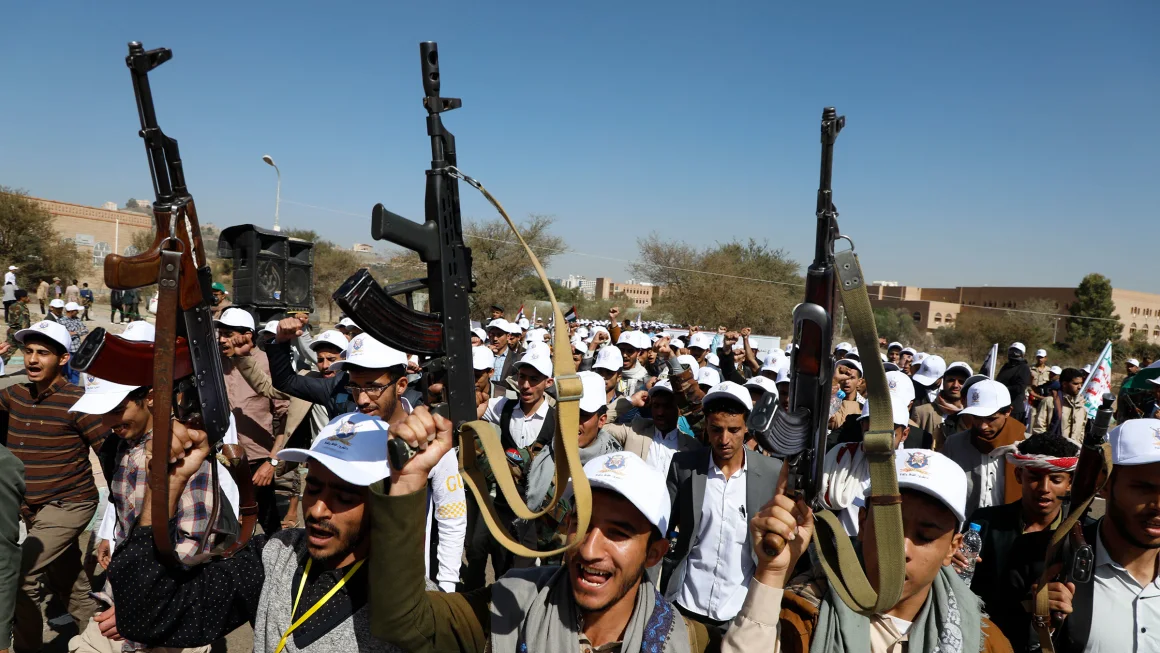
The Biden administration is facing increasing challenges in halting the continuous assaults by the Iran-backed Houthis on ships in the Red Sea. Despite significant recent strikes by the US, the group is intensifying efforts to strengthen its weapons stockpile within Yemen, according to officials briefed by CNN.
Deputy Pentagon Press Secretary Sabrina Singh stated on Thursday, “We know that the Houthis maintain a large arsenal. They are very capable, they have sophisticated weapons, and that’s because they continue to get them from Iran.”
US officials are wrestling with how to escalate pressure on the Houthis, with some within the administration asserting that relying solely on the use of force is proving ineffective. Additionally, there are concerns about the cost-effectiveness of repeatedly deploying multimillion-dollar missiles against relatively inexpensive Houthi drones and missiles.
Critics outside the administration argue for a more assertive approach, emphasizing the need to target Houthi leaders rather than focusing solely on dismantling their weapon stocks.
The US strategy has evolved since the attacks began in October, with US Central Command now regularly striking Houthi weaponry within Yemen preemptively. However, officials acknowledge a lack of clarity on the extent of damage inflicted on Houthi equipment.
“They continue to surprise us,” remarked a senior defense official. “We just don’t have a good idea of what they still have.”
### Houthi Fortifications and Underground Tactics
Despite the US hitting numerous Houthi targets inside Yemen since January, including command and control nodes and weapons storage facilities, the Houthis are reportedly fortifying their positions. They are constructing tunnels along Yemen’s western coast and increasingly staying underground.
Some officials view the Houthis’ increased time spent underground as a potential positive sign, suggesting that military strikes are having at least a psychological impact. The Houthis are also becoming more paranoid about potential strikes targeting their senior leadership.
### Shift in US Approach and Concerns
Former US officials argue that the failure to target Houthi leadership directly is hindering the US’s ability to deter the group effectively. They cite the success of deterring Iran-backed militias in Iraq and Syria by striking their leaders.
The recent spike in Houthi attacks, including the deployment of an unmanned underwater drone, has heightened concerns. While the US destroyed the drone, officials express unease about the unknown threat posed by unmanned surface and subsurface vessels in the Houthi arsenal.
### Potential for Ceasefire and International Pressure
Some officials argue for a shift toward a stronger international pressure campaign, emphasizing how Houthi attacks hinder humanitarian aid shipments to Yemeni populations. The Houthis’ concern about their public image, especially in the context of the Israeli war in Gaza, could be leveraged to influence their behavior.
Senior officials suggest that Houthi attacks might cease if the Israel-Gaza conflict ends. However, public statements downplay the Houthis’ claims that attacks are aimed at pressuring Israel, emphasizing the lack of direct ties between the attacked vessels and Israel or its allies.
The State Department and Pentagon are actively challenging the Houthi narrative and working to garner international support against them. They emphasize the environmental and humanitarian consequences of Houthi attacks on ships carrying essential goods.
### International Support and Ongoing Challenges
The US seeks support from Arab allies, including Oman and Bahrain, for Operation Prosperity Guardian, aimed at defending commercial shipping in the Red Sea. The objective is to convey to the Houthis that their actions are isolating them on the global stage. Despite concerns, there is no clear indication that Iran is withholding support from the Houthis at this time.
In conclusion, the Biden administration faces a complex challenge as it grapples with the Houthis’ persistence in attacks, prompting a reassessment of its military and diplomatic strategies in the region.