The Department of Justice (DOJ) has formally verified the authenticity of Hunter Biden’s laptop, a revelation that had been previously suppressed and could have had far-reaching implications for the 2020 presidential election. A recent poll indicates that 71% of Americans believe accurate reporting on Hunter’s infamous “Laptop from Hell” had the potential to alter the course of the election.
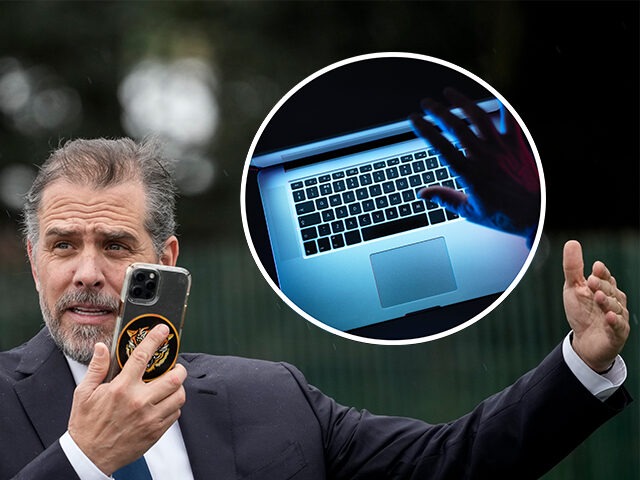
The confirmation by the DOJ, reported by Breitbart News on Thursday, January 18, 2024, is rooted in a court filing affirming Hunter Biden as the rightful owner of the laptop. The validation process involved confirming Hunter’s connection to the laptop left at a computer store and subsequently comparing its contents with data obtained through a search warrant of Hunter’s iCloud.
Prosecutors outlined the confirmation process, stating, “Investigators also later came into possession of the defendant’s Apple MacBook Pro, which he had left at the computer store. A search warrant was also obtained for his laptop, and the result of the search warrant were largely duplicative of information investigators had already obtained from Apple.”
The belated acknowledgment of the laptop’s authenticity by major media outlets raises concerns about the potential impact of this information on public perception during the 2020 election.
Notably, following the New York Post’s breaking of the laptop story, CNN’s Natasha Bertrand authored a now-discredited Politico article that propagated a false narrative about the laptop’s origins, relying on “dozens of former intel officials.”
It took over a year for the establishment media to concede that the story was false. The Washington Post, after 532 days of neglecting the story, acknowledged that Hunter’s laptop held “authentic communications that can be verified.” Even CNN, initially dismissing the laptop as “Russian disinformation” and “made up,” eventually admitted its authenticity.
Fifteen media personalities, including CBS News reporter Lesley Stahl, cast doubt on the legitimacy of Hunter’s laptop emails, with Stahl telling President Donald Trump in 2020 that it could not be verified. The New York Times, after nearly two years, reported that the emails from Hunter’s laptop were indeed genuine.
As this revelation unfolds, it adds a layer of complexity to the political landscape, raising questions about the media’s responsibility in reporting accurate information during critical times, such as elections. The prolonged denial and subsequent admission by media outlets underscore the challenges of navigating information in an era of heightened political polarization.
In the aftermath of this confirmation, the focus turns towards Hunter Biden, who is scheduled to undergo a closed-door deposition along with five associates. This development may provide further insight into the contents of the laptop and its potential implications.
As the political fallout continues, this revelation about Hunter Biden’s laptop adds another chapter to the intricate dynamics of the 2020 presidential election, emphasizing the importance of transparent and accurate reporting in shaping public discourse and electoral outcomes. The lasting impact of delayed admissions and false narratives raises broader questions about media credibility and the role of information dissemination in the democratic process.