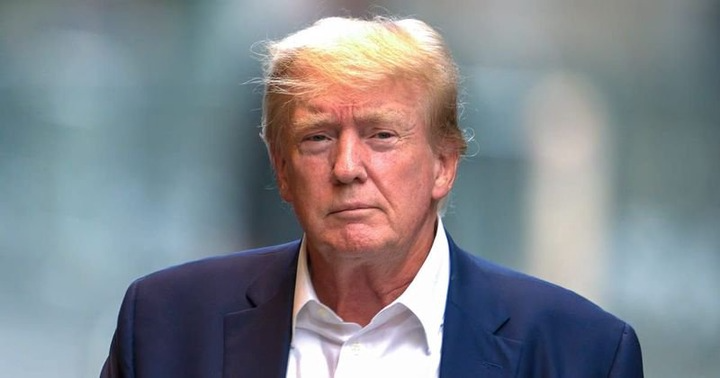
The question of whether former President Donald Trump is eligible to run for public office continues to loom large in the wake of the Supreme Court’s recent decision not to hear a Texas Republican’s challenge regarding Trump’s qualification under Section 3 of the 14th Amendment.
In a recent news article by Alton Frye, a former Senate staff director and President of the Council on Foreign Relations, it’s explained that despite this development, several other challenges and lawsuits are currently underway across the nation, indicating that this issue is far from being resolved anytime soon.
While the Supreme Court serves as the highest authority for interpreting the Constitution, the power to interpret the Constitution in specific cases and take action based on those interpretations resides with Congress.

Traditionally, courts avoid getting involved in political matters that fall within the domain of the legislative and executive branches. When it comes to disputes over Trump’s eligibility to be on the presidential ballot in 2024, based on the 14th Amendment, the courts may choose to follow this established practice.
It’s important to note that back in February 2021, a significant Senate majority, voting 57-43, affirmed that Trump was guilty of “incitement of insurrection” during the Capitol riot on January 6th. Under Section 3 of the 14th Amendment, this guilty verdict could potentially disqualify him from holding future office.
While the Senate didn’t reach the two-thirds majority required for the removal of an incumbent, it did send a clear message with a substantial majority supporting the political verdict of Trump’s guilt.
If state officials or courts arrive at a similar conclusion, the responsibility would shift to those seeking a supermajority in both the House and Senate to rescind any 14th Amendment disqualification, as outlined in Section 3.
As Alton Frye points out, judges should acknowledge that the Senate already addressed this political question through its February 13, 2021 vote on Trump’s second impeachment.
While the vote didn’t meet the two-thirds threshold for removal, it did see 57 senators endorsing language that explicitly convicted Trump of incitement of insurrection and disqualified him from holding any further office. These elements mirror those of the House impeachment.
It’s worth noting that although the 43 Republican senators who opposed Trump’s conviction held varying views, the Senate’s majority made its stance clear on both Trump’s guilt and disqualification.
At present, the Senate comprises a majority of members who, by finding Trump guilty in 2021, have essentially already determined him to be disqualified from future office.
To emphasize this point, the Senate could adopt a resolution reaffirming its previous verdict on the former president, stating that the removal of such a disqualification would require a two-thirds vote in both houses of Congress, as dictated by the 14th Amendment.
While there are associated risks with such a resolution, prudent legislators will carefully consider them. In the end, reaffirming the Senate’s prior findings regarding Trump is crucial to safeguarding the Senate’s institutional authority and guiding future actions on various fronts, including the protection of electoral integrity.
This would offer judges clarity on the Senate’s position regarding Trump’s disqualification and the improbability of a two-thirds majority in the Senate to overturn that disqualification