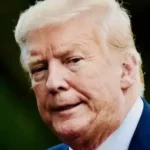
Donald Trump’s recent comments regarding the war in Ukraine have sparked widespread concern, not just for their inaccuracy but for their dangerous implications on global security. The former US president’s remarks—blaming Ukrainian President Volodymyr Zelensky for the ongoing conflict—demonstrate a distortion of facts that risks reshaping international discourse in favor of authoritarian regimes.
Trump’s Misleading Narrative
In an interview with commentator Patrick Bet-David, Trump asserted that Zelensky “should never have allowed this war to happen,” labeling him a “loser.” Furthermore, he accused President Joe Biden of “encouraging” the war, while claiming the conflict wouldn’t have occurred under his leadership. These statements are not just distortions—they threaten to redefine the narrative in ways that undermine Ukraine’s legitimacy and sovereignty.
Contrary to Trump’s claims, the war was not something Ukraine “allowed” to happen. It was a direct result of an unprovoked invasion by Russia, orchestrated by Vladimir Putin with the goal of reasserting control over a sovereign nation. To suggest otherwise is an insult to the millions of Ukrainians who continue to defend their homeland from this brutal aggression.


Undermining Ukraine’s Right to Self-Defense
Trump’s rhetoric fundamentally shifts the blame from the aggressor, Russia, to the victim, Ukraine. This narrative not only erodes Ukraine’s right to self-defense but also undermines the broader international principles of sovereignty and territorial integrity. Since World War II, these principles have been central to maintaining global stability, protecting smaller nations from aggressive powers. By adopting a stance that echoes Moscow’s disinformation, Trump’s comments serve to bolster Russian propaganda and weaken the international coalition supporting Ukraine.
Echoing Moscow’s Talking Points
What is particularly alarming is how closely Trump’s narrative aligns with the Kremlin’s. Putin has consistently sought to blame Ukraine and its Western allies for the war, positioning Russia as a victim of NATO expansion and Ukrainian resistance. Trump’s comments fit seamlessly into this disinformation campaign, raising serious questions about his reluctance to condemn Putin despite overwhelming evidence of Russian war crimes in Ukraine.
Trump’s unwillingness to hold Putin accountable suggests a deeper alignment with authoritarian ideals. His past presidency was marked by a concerning trend of cozying up to autocrats, and his rhetoric now may hint at a desire to follow a similar path.
The Global Impact of a Trump Presidency
The potential global repercussions of Trump’s return to power are enormous. His repeated undermining of NATO during his presidency sent shockwaves through the alliance, leaving Europe’s security in jeopardy. A second Trump term could see the complete abandonment of Ukraine, a move that would embolden not only Russia but authoritarian regimes worldwide. China could view this as a green light to invade Taiwan, and other dictatorships might be encouraged to act aggressively, confident that the US would not intervene.
Eroding Empathy for Ukraine’s Struggle
Perhaps the most chilling aspect of Trump’s comments is his lack of empathy for the Ukrainian people. For nearly three years, Ukraine has fought not only for its survival but for the values of democracy, human rights, and freedom. These are the same values that the West, particularly the United States, claims to champion. To dismiss this struggle as a “loser’s war” is an affront to the thousands who have died defending their country, and it disregards the sacrifices of millions who have lost loved ones or been displaced by the conflict.
Fueling Kremlin Propaganda
Trump’s dangerous rhetoric has far-reaching consequences. By shifting the blame for the war to Zelensky, he provides ammunition for Kremlin propaganda, which aims to erode Western unity and weaken global support for Ukraine. This narrative undermines the international solidarity that has been crucial in opposing Russian aggression.
A Grim Future Under Trump
The implications of Trump’s potential return to the White House are staggering. A second Trump presidency could normalize the annexation of Ukrainian territories by Russia, legitimizing violent conquest in the modern era. Such a scenario would shatter the foundations of international law and order, leading to further instability, particularly in Europe.
Authoritarian regimes around the world would likely feel emboldened, free to disregard international norms and redraw borders with impunity. Smaller nations, like Ukraine, would be left vulnerable, and the global institutions that have maintained peace since World War II could crumble.
Standing with Ukraine for the Future of Democracy
The stakes in this conflict extend far beyond Ukraine’s borders. The war is not just about territorial disputes; it’s a battle between democracy and authoritarianism, between freedom and oppression. Trump’s refusal to hold Putin accountable and his dangerous rhetoric against Ukraine threaten to tip the balance in favor of autocracy.
If the world fails to challenge this narrative now, the consequences could be dire. Autocrats may rule without consequences, and the values of freedom and justice may become relics of the past. Standing with Ukraine is not just a moral imperative—it is essential for the future of global democracy.
In the face of such threats, the international community must stand united with Ukraine, reinforcing our commitment to the values of democracy and human rights. The future of global stability depends on it.