In a historic moment on Capitol Hill, Vice President Kamala Harris shattered a 191-year-old U.S. Senate record, casting her 32nd tie-breaking vote during a pivotal decision to advance the nomination of Loren Ali Khan for a U.S. district judge position. This landmark achievement surpassed the previous record set by John C. Calhoun, and Senate Majority Leader Chuck Schumer acknowledged its significance.
“Today is historic. Vice President Harris has just cast her 32nd tie-breaking vote, the most tiebreakers ever. I join all of my colleagues on both sides of the aisle thanking the vice president for her leadership and for making the work of the Senate possible,” Schumer stated.*
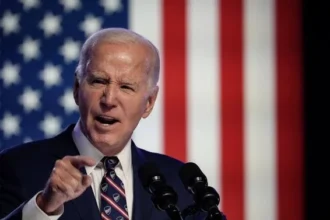
*However, against the backdrop of Harris’s historic feat, the Biden administration faces a challenging political landscape as President Joe Biden experiences a decline in popularity, trailing former President Donald Trump for the first time in his presidency.
According to a recent NBC News survey, Biden’s approval rating has dropped to 40 percent, with Harris’s approval sinking below 30 percent—marking her as the least popular vice president in the modern era.
The survey also revealed that in a head-to-head comparison with a generic Republican candidate, Biden trails at 37 percent compared to the Republican’s 48 percent. In a matchup against Trump, 46 percent of voters expressed their preference for the former president, while 44 percent favored Biden.
NBC political correspondent Steve Kornacki highlighted the survey findings, pointing out that Biden’s once-strong advantage in likability over Trump has eroded, with both men now tied in this category. Even among traditionally more liberal-leaning younger voters (18-24 age group), there is a notable shift towards Trump, marking a potential “massive sea change.”
Recent surveys not only indicate a national trend favoring Trump but also suggest that he holds an advantage in key swing states. A PRRI Research/Ipsos survey revealed that while Biden leads in a national two-person race, Trump maintains a clear advantage in crucial swing states such as Arizona, Georgia, Michigan, Nevada, Pennsylvania, and Wisconsin.
As the Biden administration grapples with declining approval ratings and a resurgent Trump, the political dynamics in the lead-up to the 2024 election remain fluid and unpredictable. Kornacki emphasized the significance of party unity, noting that only 7 percent of Republicans approve of Biden’s job performance, while 21 percent of Democrats express disapproval.
In this complex political landscape, Vice President Harris’s record-breaking tie-breaking vote adds a historic element, underscoring the challenges faced by the administration in navigating a divided and increasingly skeptical electorate.